Has Section 21 Been Abolished? What Landlords Do Now
October 3, 2026
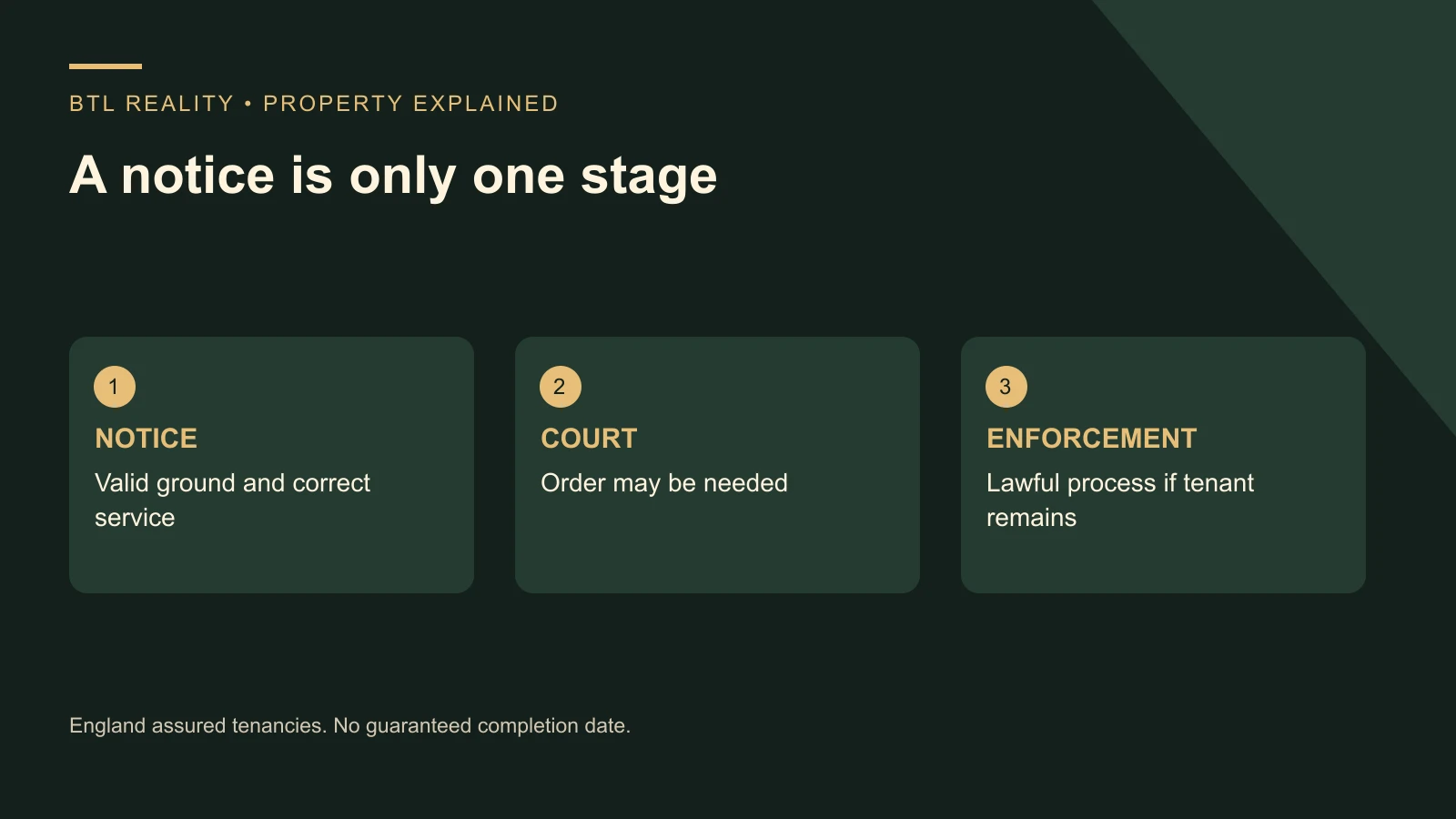
Section 21 has been abolished for new notices in England’s private assured-tenancy system. Since 1 May 2026, landlords cannot start the old “no-fault” route by serving a new section 21 notice. A landlord seeking possession needs a valid statutory ground and the correct process instead.
That does not mean a rental can never be recovered. It means ownership alone is not enough to tell a tenant to leave on whatever date suits the owner. The reason, tenancy type, evidence, notice and court procedure all matter.
This guide explains the practical change for landlords. It is general information, not a notice template or advice that a particular eviction can proceed. If a tenant’s home or a live court deadline is involved, get a housing solicitor to check the actual facts before acting.
What changed on 1 May 2026?
The official ending-a-tenancy guidance says covered assured shorthold and assured tenancies became assured periodic tenancies on that date. New section 21 notices are no longer available, even if an older agreement contains a clause referring to them.
Covered tenancies now continue on a rolling basis. An old printed end date does not automatically end the tenancy under the new regime. This is a major operational difference for anyone who previously planned a sale, refurbishment or move around the expiry of a fixed term.
The right starting question is the tenancy’s legal status. Resident-landlord arrangements, regulated tenancies, certain student accommodation and other excluded cases can have different rules. Do not assume a general internet guide identifies the correct process for an unusual agreement.
What happened to section 21 notices served before May?
The transitional rules allowed a limited period for valid older notices to be used. They did not create an indefinite right to begin proceedings under section 21. By October 2026, a landlord should not assume that a notice kept in a drawer remains available for a new claim.
Proceedings already issued under the transitional arrangements are a separate question from serving a new notice now. If you have an existing case, ask your solicitor how the relevant deadlines and transitional provisions apply. Do not withdraw or replace proceedings simply because a summary article says Section 21 has ended.
The government’s eviction guidance is a starting point, but the date of service, validity of the notice and date proceedings began can change the answer. Keep the original documents and a clear chronology.
The replacement is not one universal ground
Landlords generally use section 8 with one or more valid grounds for possession. Some grounds are mandatory if all legal requirements are established; others are discretionary, allowing the court to consider whether possession is reasonable. That distinction affects both the evidence and the outcome.
Examples include the landlord intending to sell, the landlord or qualifying family moving in, qualifying rent arrears, breach of tenancy and antisocial behaviour. The official grounds guide explains the different conditions.
The ground should follow the true facts. It should not be selected because it appears to have the shortest notice period or sounds easier to prove. Knowingly or recklessly misusing a ground can create serious consequences beyond losing the possession application.
Selling or moving in requires forward planning
For the ordinary new-tenancy sale and moving-in grounds, the protected period prevents the notice from requiring departure within the first twelve months. The notice period is generally four months for these grounds. Notice can be given earlier, but its expiry must respect the protected period and the other requirements.
There are exclusions and special circumstances, so that summary is not enough to calculate your own notice. In particular, the status of older non-shorthold assured tenancies matters. Our selling-a-rental guide explains the decision between selling with tenants and pursuing vacant possession.
Using the sale or moving-in ground can also trigger restrictions on remarketing and reletting. An owner should not assume they can secure possession for a sale, dislike the offers and immediately return to the rental market. Check the consequences before starting the process.
Arrears and antisocial behaviour have different rules
The current monthly-rent threshold for mandatory Ground 8 is at least three months’ rent at the relevant stages, with other detail for different payment frequencies and qualifying benefit delays. The notice period for that ground is four weeks, not the four months used for the ordinary sale ground.
Other arrears grounds can be discretionary. Antisocial-behaviour grounds have different requirements again. This is why a statement that “all evictions now need four months” is wrong. It is also why a landlord should not calculate an eviction date simply by counting missed payments.
Our rent-arrears guide separates the unpaid rent balance from the cash needed to keep the property running. Both matter, but they answer different questions. The legal threshold is not a recommendation to ignore an emerging payment problem.
A notice is the beginning of a process
If the tenant remains after the relevant notice expires, the landlord may need to apply to court for a possession order. Further lawful enforcement can be required if the tenant does not leave following that order. Actual times depend on the case and the court process.
Do not remove belongings, change locks, disconnect services or use pressure as a substitute. The government guidance warns about harassment and illegal eviction. A landlord’s genuine financial stress does not turn unlawful self-help into a lawful route.
For planning, distinguish the minimum notice period from the time until you actually regain possession. A sale contract or mortgage plan based on the minimum alone can leave the owner exposed if proceedings take longer or the notice needs correcting.
What should be ready before taking advice?
Prepare the agreement, a timeline of the tenancy, deposit documents, relevant safety records and the facts supporting the proposed ground. For arrears, include an accurate rent schedule. For repairs or behaviour, keep dated communications and evidence without exaggeration.
Tell the adviser about weaknesses as well as strengths. Missing documents, a disputed payment or a previous informal message can affect the route. Finding those issues before service is more useful than being surprised by them after paying court costs.
If an agent manages the home, identify who is authorised to instruct advisers and send notices. There should be one reliable version of the facts. Conflicting instructions from an owner and agent can create confusion for the tenant and undermine the record.
Stress-test a period without rent
Planning scenarios, not estimates of court duration or legal quotations. Excludes tax and any receipts.
A cash-reserve example while a case is resolved
Suppose a hypothetical property costs £650 a month to keep running when no rent is received. Add an illustrative £2,000 allowance for one-off costs, which is not a solicitor’s quote or a prediction of court fees. Three months without receipts requires £3,950; six months requires £5,900; nine months requires £7,850.
The arithmetic is monthly outgoings multiplied by months, plus the one-off amount. Those periods are stress scenarios, not estimates of how long a possession case will take. An adviser can explain the legal process, while your budget should test whether you can survive a longer interruption.
Do not count the tenant’s protected deposit as freely available working capital. Do not assume an insurer will pay immediately either. Check the policy’s conditions, waiting periods and claim process. The buy-to-let deal calculator helps examine ordinary running costs; keep exceptional case costs and reserves visible alongside it.
What this changes about buying a rental
The purchase should fit a realistic holding period and a lawful management plan. If you might need the home back at a precise short-term date, a normal private tenancy may not suit the plan. Obtain advice before committing, rather than expecting a future possession route to solve a mismatch.
For an existing rental, review the investment without assuming possession is either impossible or instant. Both extremes lead to poor decisions. Sustainable rent, manageable borrowing, adequate reserves and competent management remain central.
The landlord policy hub links the related rules. Starter Club can support the educational planning side, but a specific possession decision belongs with a qualified housing professional.
Frequently asked questions
Can I serve a section 21 notice in October 2026?
Not as a new notice for a covered private assured tenancy in England. That route ended on 1 May 2026. Identify the correct tenancy type and, if possession is needed, obtain advice about an available ground and the current procedure.
Does an old agreement keep my section 21 rights?
An agreement cannot preserve a new-notice route that the law has removed. The statutory reforms changed covered tenancies even where the old wording remained on paper. Existing proceedings and transitional cases need their own analysis based on dates and documents.
Can I evict a tenant because I want to sell?
A sale ground exists, but it has conditions, notice requirements, protected-period rules and exclusions. Seeking possession also differs from selling with the tenant in place. Do not promise vacant possession or serve notice until the correct route has been checked.
Is every section 8 notice four months long?
No. Notice periods differ by ground. Sale and moving-in grounds generally involve four months, while specified arrears grounds have different periods. Using the wrong period can undermine a notice. Check the current official ground and obtain advice for the actual facts.
Must I wait for three months’ arrears before speaking to a tenant?
No. Communicate promptly and appropriately when a payment is missed, check the account and explore the reason. The Ground 8 threshold is a legal condition for one route, not a instruction to ignore arrears. Avoid harassment and seek advice before formal action.
How long will it take to regain possession?
There is no reliable universal duration. Notice, service, evidence, court scheduling, defences and enforcement can all affect timing. Budget for delay and ask the adviser handling the case for a realistic range. A notice expiry date is not a guaranteed moving-out date.