How Much Does It Cost to Sell a Buy-to-Let Property?
October 4, 2026
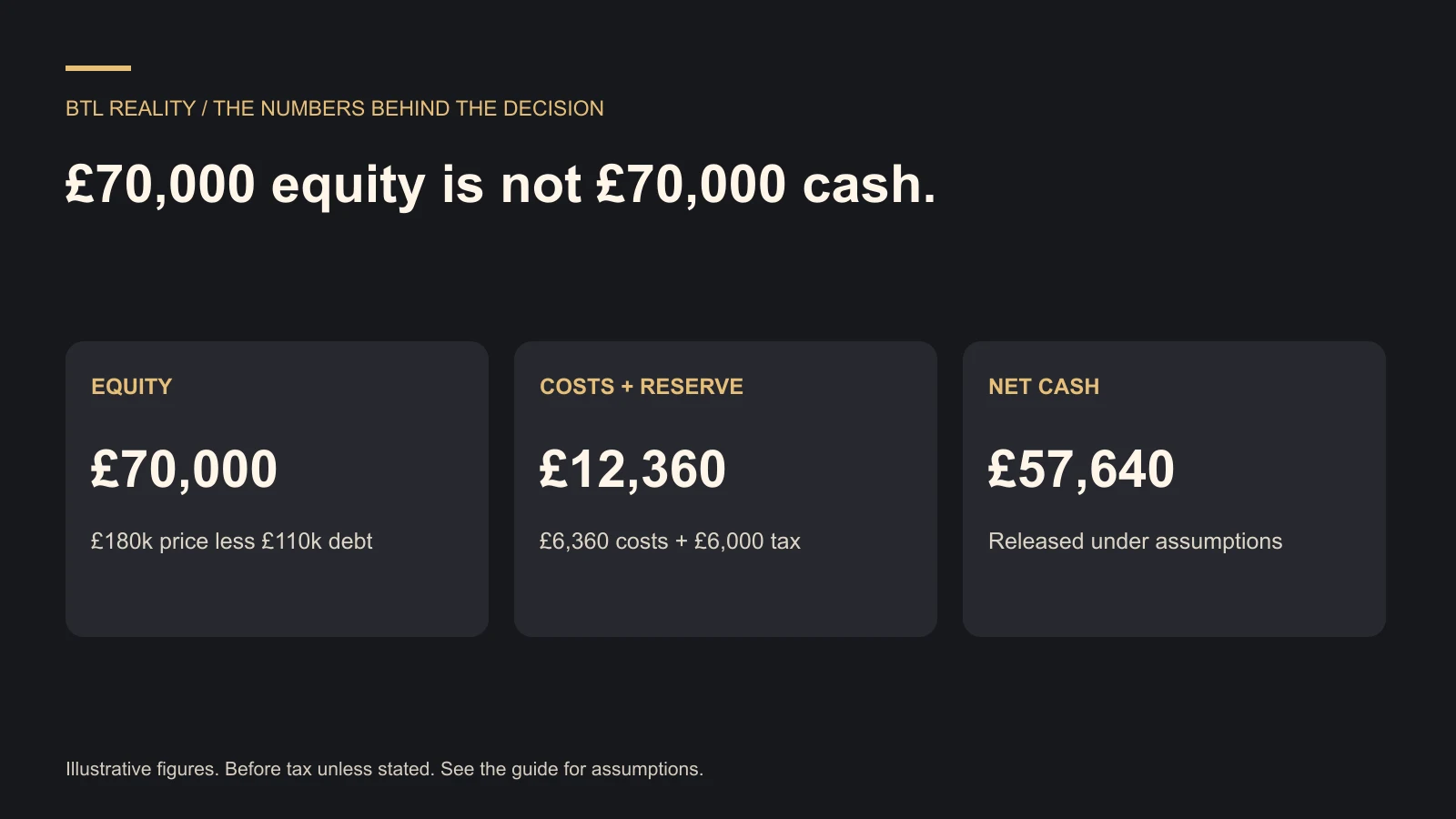
The cost of selling a buy-to-let is more than the estate agent's fee. Budget for legal work, mortgage redemption charges, any early repayment charge, preparation or holding costs, and tax where due. The number you need is the cash left after all of those items, not the headline sale price.
A £180,000 property with £110,000 of debt appears to contain £70,000 of equity. That does not mean £70,000 will arrive in your usable investment pot. This guide shows how to build a sale budget, compare offers and avoid confusing sale proceeds with profit. The calculator uses your assumptions and a manually entered tax reserve; it does not calculate Capital Gains Tax.
Start with three separate figures
Sale price is what the buyer agrees to pay. Equity before costs is the sale price less the mortgage balance. Net cash released is what remains after debt, transaction costs and any tax provision. All three are useful, but they answer different questions.
Profit is different again. To assess the investment's overall performance, you would need to account for the original cash invested, acquisition costs, improvements, rental results and eventual sale outcome. The cash returned at completion contains some of your original capital. It should not all be described as money the property has made.
This is particularly important after refinancing. Borrowing more earlier may have released cash at that time, but the higher remaining debt can reduce what comes back on sale. Do not count the earlier withdrawal and the original equity again as if the mortgage had never increased.
Build a complete selling-cost checklist
MoneyHelper's selling guide identifies the main transaction stages and costs. For your budget, obtain written quotations for the particular property rather than relying on a national average. Leasehold work, title issues or a complicated tenancy can change the scope of a quote.
- Estate agency commission or fixed fees, including VAT where applicable.
- Legal fees, disbursements and any leasehold information or management pack.
- Mortgage redemption amount, exit administration and early repayment charges.
- Agreed preparation, clearance or repair work.
- Holding costs until completion, avoiding double-counting rent and expenses.
- Tax provision based on professional advice and the ownership structure.
Check when each cost is payable and whether it is due if the sale does not complete. A low fixed marketing fee paid upfront has different risk from a fee triggered by a completed sale. Neither structure is automatically better; the terms and likely service matter.
A worked example: where £70,000 of equity goes
Take an illustrative sale at £180,000 with a £110,000 mortgage balance. Agency commission at 1.2% including VAT is £2,160. Add £1,500 legal costs, a £2,200 early repayment charge and £500 of other selling costs. Cash before the tax provision is £63,640.
Set aside an illustrative £6,000 for tax and the remaining amount is £57,640. The combined selling costs and tax reserve have reduced the apparent £70,000 equity by £12,360. These are chosen example inputs, not average fees, a lender quote or a calculated tax liability.
If the sale price falls by £10,000 while those assumptions remain otherwise unchanged, agency commission falls by £120 and net cash falls by £9,880. A relatively small percentage change in the property price can therefore make a substantial difference to the deposit money available for your next purchase.
Calculate net cash released on sale
Uses your assumptions. Tax is an input, not calculated. Avoid including the same lender charge in both mortgage balance and separate costs. Negative net cash means extra money is required.
JavaScript is required to change the results. The figures above show the default worked example.
The calculator deliberately accepts a tax reserve as an input. Enter an estimate from your adviser, then update it when the sale details are known. If costs and debt exceed the price, the negative result means this model requires additional cash. It is not money released to invest elsewhere.
Mortgage redemption is more than the balance on an app
Ask your lender or conveyancer for an up-to-date redemption figure for the expected completion date. Interest and charges may make this differ from the balance shown in a banking app. Establish whether an early repayment charge applies and how it changes over time under your mortgage terms.
Suppose waiting three months would reduce a charge by £2,000, but the property costs £650 a month to hold without rent during that period. The three-month holding cost is £1,950. Before considering price changes or other costs, most of the apparent saving has disappeared. This is a comparison, not a recommendation to wait or to sell quickly.
If rent continues, use the actual expected net holding result rather than assuming the property is empty. Also consider whether the proposed completion date is achievable. A buyer's intention to complete before a mortgage anniversary is not a guarantee that every legal and financing step will finish on time.
Tax is based on the relevant gain, not simply the equity
HMRC's guidance on selling property explains that selling a buy-to-let can create Capital Gains Tax for an individual. The gain calculation considers the disposal and acquisition figures, allowable costs and relevant reliefs. Mortgage debt is not the same thing as the property's tax cost.
That means two owners selling equally valued homes with equal mortgage balances can face different tax outcomes. Their original purchase prices, allowable expenditure, ownership shares, residence history and other circumstances may differ. A generic percentage of sale proceeds cannot resolve those differences.
For most taxable UK residential-property disposals by individuals, reporting and payment can be required within 60 days of completion. Ask your adviser about the exact obligation early. Company and non-resident cases have their own considerations. Keep the tax reserve separate from the cash you intend to commit to another deal.
Selling with a tenant or seeking vacant possession
A property can be marketed to investors with a tenant in place, while a vacant property may appeal to a different pool of buyers. Compare credible price opinions and the full cost of each lawful route. Do not assume that a higher vacant asking price automatically creates a better net result.
Tenants have rights, and selling does not itself end a tenancy. Obtain current advice before serving notices, making promises about vacant possession or agreeing a timetable dependent on a tenant leaving. Our guide to selling under the Renters' Rights Act explains the wider England-specific considerations.
For the financial comparison, separate costs common to both routes from extra costs caused by one route. Common legal fees should not be counted twice. Extra empty months, additional preparation and uncertain completion timing deserve their own scenarios. Keep communication with the tenant respectful and factual throughout.
Compare offers by net outcome and deliverability
An offer £3,000 higher is attractive, but ask what supports the buyer's ability to proceed. Financing, chain position, conditions and the proposed timetable can affect the likelihood and timing of completion. No buyer is risk-free, so avoid treating one label, such as “cash buyer”, as a substitute for proper checks.
Write a small comparison for each serious offer: price, expected costs, likely timing, conditions and unresolved questions. If one route involves extra fees or substantial delay, show those explicitly. Do not invent a precise probability of completion simply to make a spreadsheet produce a preferred answer.
Be cautious about spending heavily on presentation without a reasoned return. Ask agents which specific work would improve marketability and obtain quotes. A £5,000 refresh justified by a hoped-for £5,000 price increase has no margin for error, time or additional costs. Necessary maintenance and disclosure duties still need to be addressed properly.
Decide what the released money is for
If the purpose is another purchase, run that next deal using the realistic net proceeds rather than the original equity estimate. Include its acquisition costs and a reserve. A sale that releases £57,640 does not support a £57,640 deposit plus fees unless you have another source of cash.
If the purpose is income or reducing debt, model that objective directly. The property portfolio calculator helps review the wider position, while the financial freedom calculator explores future scenarios. Neither can turn uncertain sale proceeds or investment returns into a guarantee.
For a decision with several properties and competing objectives, a free strategy call can help clarify what you are trying to achieve. Bring a complete list of values, debts, rent and costs. Tax and legal decisions should then be checked with the appropriate professionals before action.
Frequently asked questions
How much will I keep when I sell my rental property?
Start with the agreed sale price, subtract the actual mortgage redemption figure, selling costs and a suitable tax provision. Use current quotations and update the calculation before completion. The estimate is only as reliable as the inputs and should include any additional cash commitments you have already agreed.
Is my mortgage balance deducted when calculating Capital Gains Tax?
Mortgage repayment reduces the cash you receive, but it is not the same as an allowable deduction from a capital gain. The tax calculation follows acquisition, disposal, expenditure and relief rules. Ask your accountant to calculate tax separately from the conveyancer's estimate of sale proceeds.
Should estate agent fees include VAT in my budget?
Use the total amount you expect to pay. If a quote is stated plus VAT, convert it to the cash cost before comparing it with an inclusive quote. Check the fee trigger and any minimum charge too. A percentage alone may not describe the full agreement.
Can I avoid an early repayment charge by waiting?
Possibly, depending on the mortgage terms and timing. Compare the charge reduction with holding costs, expected rent, other fees and uncertainty over sale price and completion. Ask the lender for the actual figures rather than assuming that a mortgage anniversary removes every charge.
Does the calculator calculate my Capital Gains Tax?
No. It subtracts the tax reserve you enter. That keeps the distinction clear between a sale-cash calculation and a personal tax calculation. Obtain advice on the gain, applicable reliefs, reporting and deadlines, then use the resulting estimate in your sale budget.
Is the money released on sale all profit?
No. It can include your original deposit, later capital invested, repaid debt and accumulated gain, after costs. To assess total investment performance, include the property's full cash history and rental results. Net proceeds answer how much cash is released now, not how much the investment earned overall.