How Much Can a Landlord Increase Rent in 2026?
October 3, 2026
There is no single percentage that every landlord in England can add to the rent in 2026. For covered assured periodic tenancies, the current process generally allows one increase each year through section 13, using Form 4A and at least two months’ notice. A tenant can challenge a proposed increase against the open-market rent.
That makes two questions important: what rent could the property reasonably command, and have you followed the correct procedure? A rising mortgage bill answers neither question by itself.
This guide explains the rules checked on 4 October 2026, how to gather useful evidence and what a proposed increase actually does to cashflow. It concerns England’s covered private assured tenancies, not every arrangement across the UK.
The current route for a rent increase
The official rent-increase guidance explains that landlords use the section 13 process and the prescribed Form 4A. For the new framework, the process applies even where the tenant has agreed to the increase. An informal message alone is not a substitute.
The increase must respect the annual timing rules, including the restriction during the first year of a new tenancy. The notice period is at least two months. Check the actual dates and service requirements rather than assuming that sending a message on the first of one month produces a valid increase on the first of the next.
Delivery can include permitted methods such as post, personal delivery or email where the agreement allows it. Keep evidence of what was sent, to whom, how and when. A correct amount with defective service can still create a problem.
Is there a maximum percentage increase?
England’s present framework is not a universal cap saying every rent may rise by CPI, 3% or 5%. The central comparison is the property’s open-market rent, with a route for the tenant to challenge the proposal. Our rent-controls guide separates this from other forms of rent regulation.
If a property has been substantially below market rent, an evidence-supported increase may be a larger percentage than one on a property already close to the market. That does not remove the annual procedure, notice requirements or the tenant’s ability to challenge it.
Conversely, a modest-looking increase is not automatically justified. A home with unresolved condition issues, a less convenient location or materially different accommodation should not be priced by copying the most expensive advert in the wider town.
How to build a useful rent comparison
Look for genuinely comparable properties: similar type, size, condition, location, parking, outside space, furnishing and tenancy terms. Record the dates and sources. An asking rent is useful evidence of current marketing but does not prove the amount ultimately agreed.
Ask local agents about achieved rents and the time properties spend available. Challenge an optimistic recommendation with specific questions. Which homes support this figure? Were they recently refurbished? Do they include bills? Are they in the same school or transport catchment?
Create a short evidence file rather than a folder of unrelated screenshots. Three carefully explained comparables may be more useful than fifteen advertisements for different types of home. Make it easy to see where your property is better, worse or broadly similar.
The rent should be defensible if read by somebody who does not share your financial goals. Mortgage costs, a desired return or a promise made when buying the property do not establish what the market will pay for the accommodation.
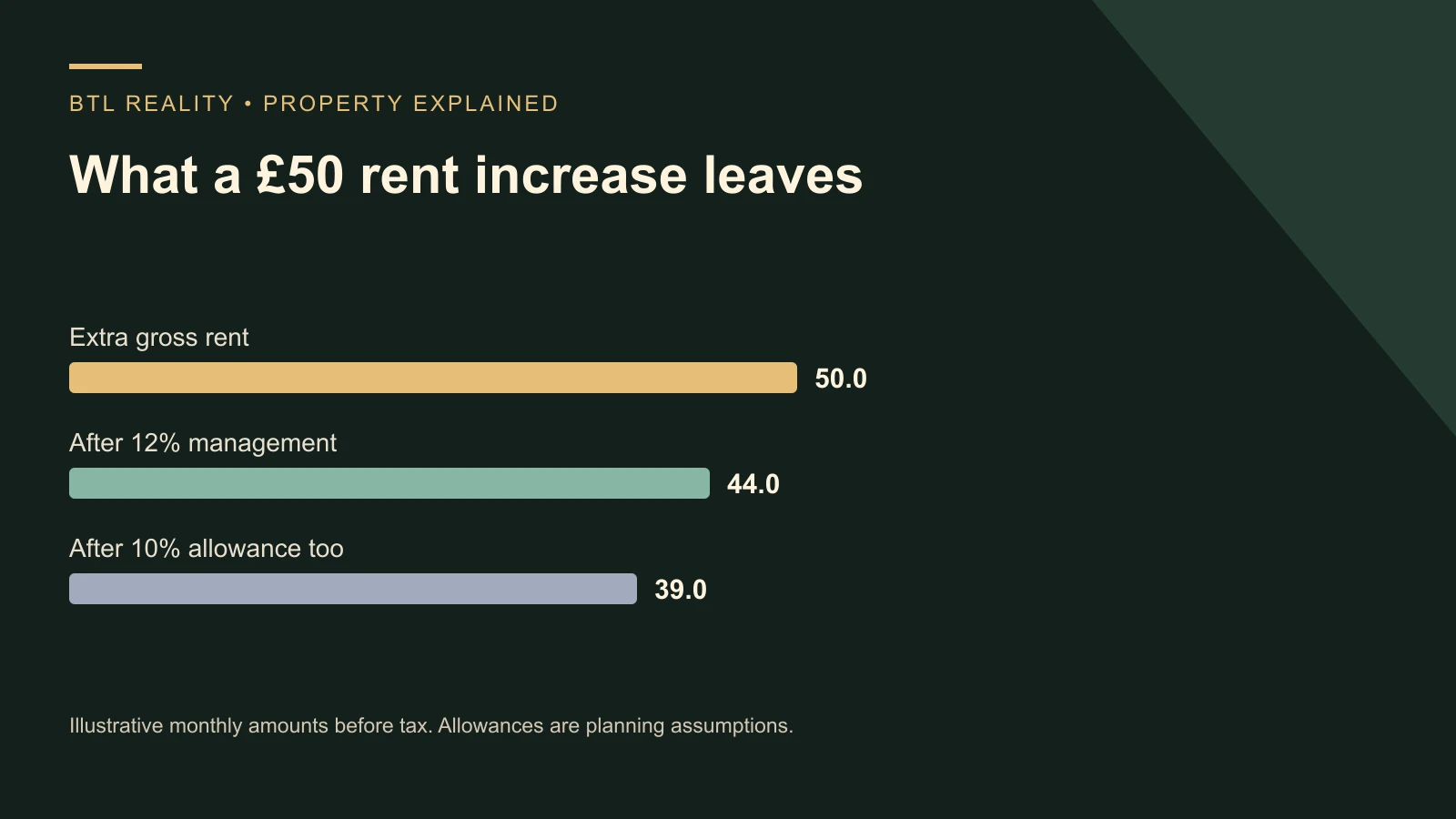
A £50 increase is not £50 of extra profit
Suppose rent rises from £950 to £1,000 monthly. The increase is £50, or approximately 5.26%. Across a full twelve months at the new amount, gross additional rent is £600. If only six months fall within your current budgeting year, the additional gross rent is £300.
Now assume a management charge of 12% including VAT on collected rent. The agent’s fee rises by £6 monthly, leaving £44 before other costs and tax. If you also use a planning allowance equal to 10% of rent for maintenance and interruptions, that allowance rises by £5, leaving £39 additional monthly modelled cashflow.
Percentage allowances are budgeting assumptions, not proof of what repairs will cost. If your management agreement charges a fixed amount, do not apply a percentage automatically. Read the contract and enter the correct VAT-inclusive cost.
What does a rent increase add?
Before other costs and tax. This does not determine a lawful market rent or validate a notice.
The calculator shows the proposed change, annual gross difference and effect of a percentage management fee. It cannot decide the lawful market rent, validate notice or predict a tribunal outcome. Use the results to understand the cash, then check the evidence and procedure separately.
What if the tenant challenges the proposal?
The tenant can use the applicable tribunal route to challenge a proposed increase. Keep the notice and market evidence organised. The aim is to establish an appropriate rent through the lawful process, not to penalise a tenant for exercising a right.
The government’s September 2026 announcement describes future reforms involving the Valuation Office. Do not confuse an announced future process with the route operating today. At the date of this guide, current guidance still directs relevant challenges to the First-tier Tribunal.
That announcement also explains the protection against having to pay the higher rent before the tribunal’s final decision. A disputed increase should therefore not be treated as certain immediate cash in a mortgage plan. Seek specific advice about the notice, application and payable amount in a live case.
What about a rent-review clause in an old agreement?
Older paperwork needs careful handling. The official guidance distinguishes valid section 13 notices served before 1 May 2026 from old contractual review clauses. A pre-May contractual clause that was due to take effect after the reforms is not simply a way around the new system.
A rent increase already made under the earlier rules can still matter when calculating the twelve-month interval. Do not reset the clock just because the tenancy converted to the new periodic framework. Keep a timeline of the previous increase and the basis on which it happened.
If your agreement has unusual wording or a notice was served during the transition, have the documents reviewed. A current internet example cannot settle every historical notice, service issue or tenancy status.
Should a landlord always charge the maximum possible rent?
The legal process and the commercial decision are related but distinct. A sustainable rent, reliable communication and a well-maintained home can support a stable tenancy. An aggressive proposal unsupported by evidence can create disputes without delivering the expected return.
Consider an illustrative £30 monthly difference between two reasonable pricing options. That is £360 over a year before costs. A single additional no-rent month at £1,000 would exceed that difference. This does not predict that a particular increase causes a tenant to leave, but it shows why retention deserves attention.
Equally, never reviewing a rent can quietly undermine a property’s ability to fund maintenance. A considered annual review can balance the local market, condition, cashflow and household circumstances without assuming either maximum increases or permanent freezes are always right.
Put the review into a simple annual system
Start by checking the last increase, tenancy start date and next permitted review point. Gather comparable evidence early, inspect or review condition appropriately, and agree responsibilities with the managing agent. Leave enough time for a correct notice rather than rushing because a spreadsheet assumes more rent next month.
Record the old amount, proposed amount, effective date, service evidence and any challenge. Update standing instructions and the rent ledger only in line with the lawful position. Avoid one person telling the tenant a different date from the one used by the accounts team.
Use the buy-to-let deal calculator to review the property’s wider economics. If the rental only works after an unsupported increase, revisit the borrowing, costs or investment plan. A tenant cannot be required to repair an owner’s original underwriting mistake through any rent the owner chooses.
The landlord rules hub connects the related changes, including advertised-rent rules for a new letting. Starter Club offers education and planning support, while disputed notices need qualified housing advice.
Frequently asked questions
Can a landlord increase rent by 10% in England?
There is no blanket answer based only on the percentage. The proposal must follow the applicable process and be supportable against the open-market rent. A tenant can challenge it. A landlord’s higher mortgage cost does not by itself justify a 10% increase.
Can rent rise twice in one year under the new rules?
For covered assured periodic tenancies, the statutory framework generally limits increases to once a year. Check the last increase and the new-tenancy restrictions. An old contract or an informal agreement should not be treated as permission to bypass the current process.
Do I need Form 4A if the tenant agrees?
The current government guidance says the section 13 process applies even where the tenant agrees to the increase. Use the correct prescribed form, timing and service arrangements. Keep the agreement and notice records rather than relying only on a text conversation.
How much notice is required for a rent increase?
The current process generally requires at least two months’ notice. The permitted effective date also depends on the annual timing rules and tenancy circumstances. Get a specific notice checked if you are unsure about service, dates or a transitional arrangement.
Is a rent increase linked automatically to inflation?
No. England’s current framework does not simply award landlords the latest CPI figure. Market evidence and the statutory procedure matter. Inflation may affect costs, but it is not itself proof of the rent a comparable property can reasonably command.
Should I compare rent before or after agent fees?
Use gross rent to describe the tenancy amount and net figures to assess your own investment cashflow. A higher gross rent can increase percentage agent fees and other allowances. Keep VAT, fixed charges, repairs, financing and tax clear so that you do not mistake revenue for profit.