How Long Can a Rental Property Be Empty Before Insurance Changes?
October 19, 2026
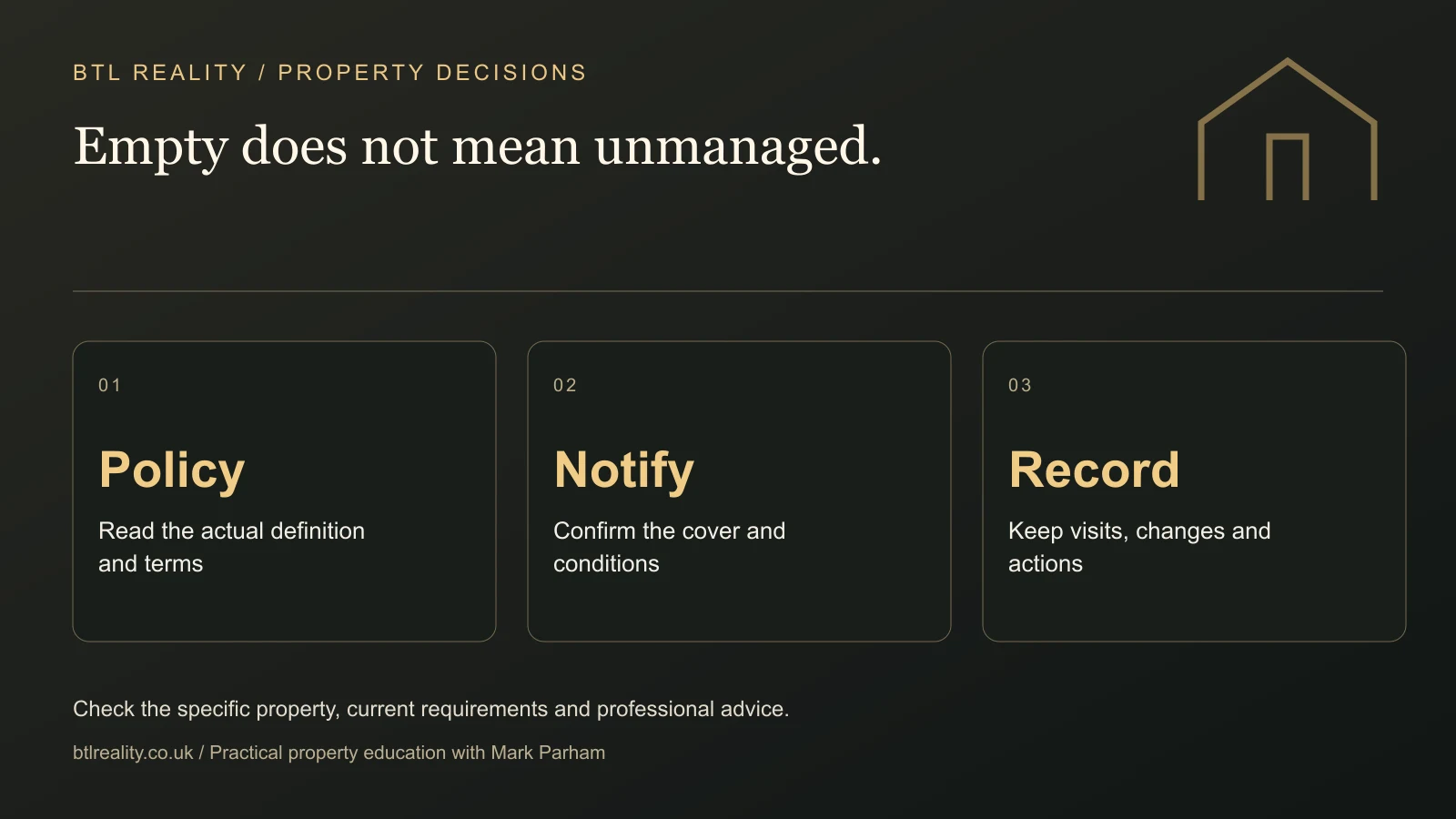
There is no single number of empty days that applies to every landlord insurance policy. Your cover may define unoccupancy in a particular way, require notification or impose conditions once the property is empty. A limit you remember from another policy is not reliable evidence for the one protecting this property.
The safest practical approach is to read the current policy documents, tell your insurer or broker about the actual circumstances and keep written confirmation of what you must do. That matters between tenants, during refurbishment and while a sale or new tenancy takes longer than expected.
Start with the policy definition, not a calendar guess
A property can be described as vacant, unoccupied or not lived in, with definitions that differ between policies. Stored furniture, occasional visits or a contractor attending may not satisfy the policy's occupation requirements. Ask how the wording applies to your situation.
Find the schedule, policy wording, endorsements and any renewal changes. Search for the sections covering occupancy, notification, exclusions, security, inspections and works. Read them together rather than relying on a headline benefit from the sales page.
The NRLA's guide to protecting an empty rental highlights the need to check policy conditions and manage the risks during vacancy. Its practical message is useful, but your insurer's actual terms and written response are the evidence for your own arrangements.
Treat an empty period as a separate operating stage
When a tenancy ends, the property still needs management. Rent may stop while finance, insurance, utilities, council tax or other costs continue, depending on the circumstances. Repairs and marketing can also overlap.
Create a void-period file with the date occupation ended, the likely next occupation date, access arrangements and responsible contacts. Include the insurer's requirements and a record of any notification. If the timetable changes, update the file and check whether further action is needed.
A letting agent may help manage this stage, but do not assume every relevant task is included in the service. Ask who handles inspections, insurance notifications, contractor access and emergency responses. A named person with a written task is better than two parties each assuming the other has dealt with it.
Make the example your own
Is the empty period properly managed?
Use the actual policy and written insurer or broker response to complete these checks.
0 of 6 checks reviewed
This is an organiser, not approval to invest. Selections stay in this page and are not saved or sent.
This checklist helps organise the conversation and evidence. It cannot determine whether a particular claim would be paid. Only the actual policy and circumstances can establish the cover available.
Notify the right party with useful information
Give the insurer or broker the property address, policy reference, date it became empty, expected duration and reason. Explain any renovation, structural work, changes in use or security issues. Do not describe a major refurbishment as a routine gap between tenants if the facts are different.
Ask for a written response confirming the applicable cover, conditions, excesses and any required change. Record the contact date and retain the correspondence. If a telephone discussion leaves something unclear, request clarification rather than writing your own interpretation into the file as though it were agreed.
Keep the information current. A two-week decorating job can turn into a longer project after defects are found. The insurance discussion should follow the real programme, not remain attached to the first optimistic completion date.
Agree an inspection process you can actually deliver
The policy may specify inspection requirements. Establish the frequency, what needs checking, who can attend and what records must be retained. Do not invent a universal schedule; follow the agreed requirements for the property and cover.
A useful record can include the date, person attending, observations, relevant photographs and action taken. Keep it factual. An inspection log created after a problem is discovered is less useful than a contemporaneous record of actual visits.
If you live elsewhere or are travelling, arrange a reliable local person or professional service. Confirm access, emergency contacts and spending authority. Someone who can notice a leak but cannot contact anybody or authorise a response may leave the property exposed for longer than necessary.
Ask about water, heating, security and utilities
Empty buildings can be vulnerable to unnoticed leaks, frost, theft and other damage. What you should do depends on the building, season, policy and professional advice. Do not assume the correct response is always to turn everything off or leave everything running.
Ask the insurer about requirements, then arrange suitable qualified help where needed. Heating, water systems, electrical equipment and alarms may need a coordinated plan. Inappropriate shutdown or recommissioning can create its own problems.
Check doors, windows and access arrangements, and make sure contractors know how the property should be secured when they leave. Keep keys controlled and record changes. The aim is a maintained, supervised property, not a building that is simply locked once and ignored until the next tenant arrives.
Renovation can change more than the timetable
Works may affect the risks an insurer is willing to cover. Structural alterations, roof work, plumbing changes, hot works or a different intended use may need specific consideration. Tell the insurer what is actually planned and ask what cover is appropriate during that stage.
Do not assume the contractor's insurance replaces your own property cover. Ask what each policy covers, who the insured parties are and where gaps may remain. A builder's assurance that they are insured is the start of a check, not the complete answer.
Retain the work specification, contractor details and relevant confirmations. If the project expands, revisit the arrangements. If the work changes how the property will be occupied, the HMO planning guide explains why planning, licensing and building requirements need separate attention.
Build the cash reserve around a realistic void
Consider an illustrative rental with £500 monthly finance, £150 of other continuing costs and £100 for agreed visits and basic upkeep. That is £750 monthly cash outflow before repairs or other exceptional expenditure.
A two-month empty period needs £1,500 for those entered costs. A four-month period needs £3,000. If a further £2,500 of work is required, the four-month case needs £5,500 before accounting for any costs omitted from the example.
Missing gross rent is a separate comparison against the original forecast. Do not add the same costs twice by combining a full lost-profit figure with the bills already included. Use the buy-to-let deal calculator to revisit the annual cashflow, then keep an explicit cash reserve for the empty stage.
Loss-of-rent cover is not a universal void guarantee
A property being empty does not automatically create an insured loss. Loss-of-rent provisions can depend on a covered event and specified conditions, limits and time periods. Routine vacancy while looking for a tenant is a different issue from accommodation becoming unusable after an insured incident.
Ask your broker to explain the scenarios relevant to the property. Keep those answers with the policy documents. Avoid treating a maximum policy benefit as money you can certainly access whenever rent stops.
For investment planning, assume you need enough liquidity to deal with the entered costs while any claim is assessed. A valid claim can still involve timing, excesses and uncovered expenditure. Insurance and cash reserves perform different jobs.
Close the empty stage properly
When occupation resumes, check whether the insurer needs confirmation. Retain the new tenancy and handover records, and update the agent and relevant service providers. Make sure the building is ready for safe occupation and that outstanding work is properly resolved.
Review what caused the gap and whether the original budget was realistic. A recurring delay between tenants may point to a marketing, maintenance or management issue that deserves attention before the next changeover.
If you are building your first rental plan, Starter Club can help you work through the wider investment decisions. The free calculators remain available without joining. Insurance advice should come from an appropriately qualified insurer or broker with the property details in front of them.
Frequently asked questions
Do all landlord policies use the same unoccupied-property limit?
No. The definition, time period, notification requirements and restrictions can differ. Read your own current documents and obtain clarification for the circumstances. Do not transfer a limit from an old policy, another property or an online example and assume it applies unchanged to your cover.
Do I need to tell my insurer between tenants?
Check the policy and ask the insurer or broker. A routine gap can still trigger requirements depending on its length and circumstances. Explain when occupation ended, when it is expected to resume and whether work is taking place. Retain the response and update it if the facts change.
Does renovation change the cover I need?
It may. The type and scale of work, contractors, empty period and intended use can affect the insurance arrangements. Describe the actual project before it starts and ask what cover or conditions apply. Do not assume the existing landlord policy or the contractor's cover automatically deals with every risk.
What inspection records might an insurer require?
The policy or written instructions should establish what is required. Practical records may include visit dates, the person attending, condition observations and actions taken. Keep evidence as visits happen and follow the specified process. A generic online inspection checklist does not override the insurer's conditions.
Can I assume my letting agent has told the insurer?
No. Confirm who has responsibility, whether the agent is authorised to do it and whether it has actually happened. Keep the acknowledgement or written confirmation. Your management agreement may not include insurance administration, and an agent may not know about changes to your policy or renovation plans.
What should I confirm before the property becomes empty?
Confirm the policy definition, notification process, cover restrictions, inspection requirements and any conditions concerning security, utilities or works. Assign responsibility for visits and emergency action, then budget for continuing costs. Keep the information together so a delayed tenancy or unexpected repair does not leave an unmanaged gap.
Put the next step into practice
Use the free tools to test your numbers, then choose the level of support that fits your next decision.