What Happens at the End of an Interest-Only Buy-to-Let Mortgage?
October 16, 2026
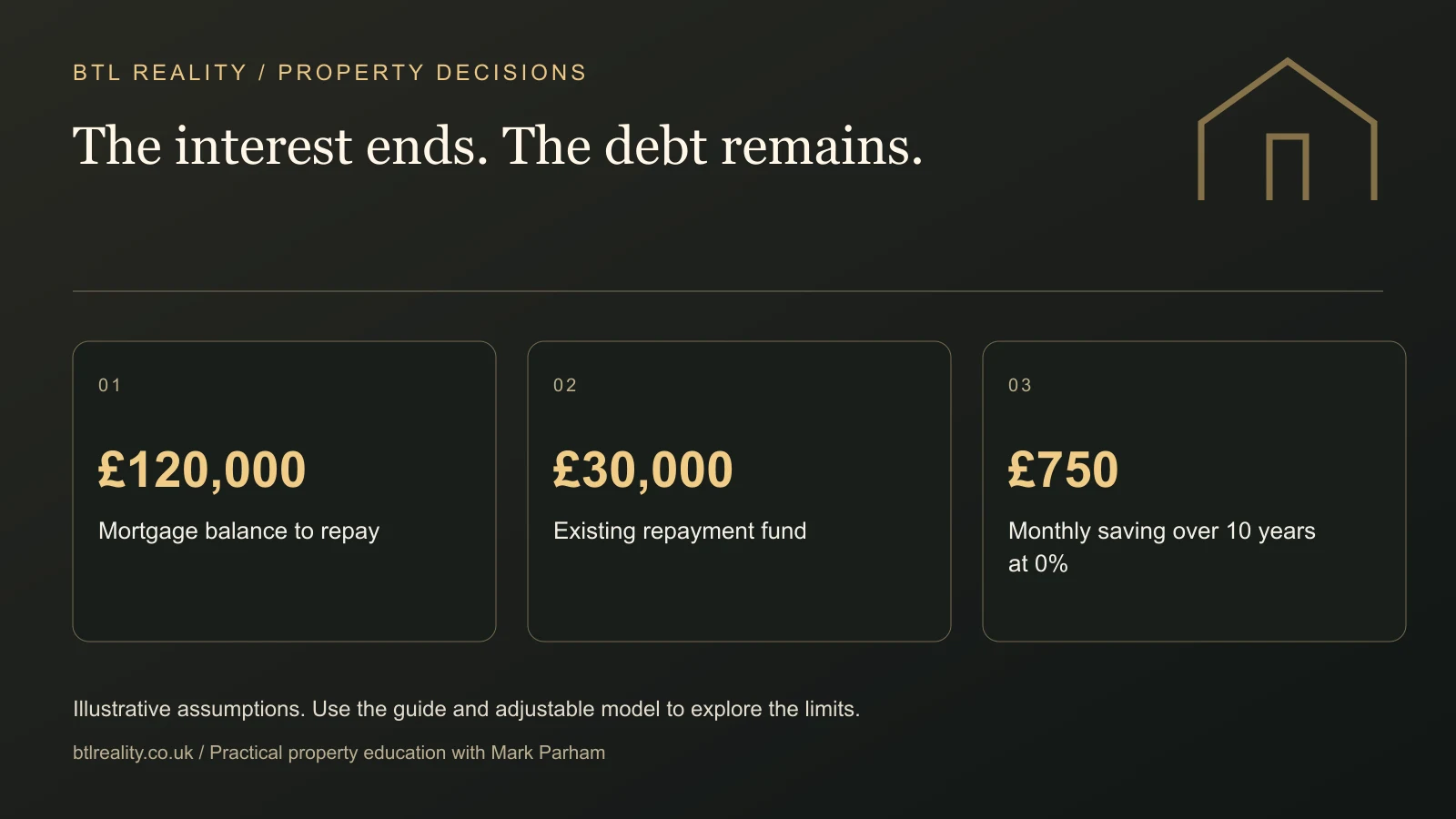
At the end of an interest-only buy-to-let mortgage, the outstanding capital still needs to be repaid. If you borrowed £120,000 and have made only the required interest payments, paying on time for the full term does not normally reduce that £120,000 balance. Your repayment plan is therefore as important as the monthly rent calculation.
The plan might involve savings, investment funds, selling property, capital repayments along the way or suitable new borrowing. Each route has costs and uncertainties. “I will remortgage again” is one possible scenario, but it should not be treated as an automatic renewal right.
This guide shows how to measure the gap, compare repayment routes and start reviewing the decision while you still have time to make useful changes.
Distinguish the mortgage term from the product period
A five-year fixed rate and a twenty-five-year mortgage term are different clocks. The fixed-rate period determines how long particular pricing applies. The overall term determines when the loan must be repaid, subject to the contract and any agreed changes.
Reaching the end of a fixed-rate deal does not necessarily mean the entire loan is due then. Reaching the final mortgage maturity is different. Read the offer and current statement so you know both dates, and ask the lender if anything is unclear.
MoneyHelper explains interest-only repayment options. The central principle is that paying interest services the borrowing while a separate plan addresses the capital. For a buy-to-let, assess that plan against the actual investment and lender terms rather than assuming a residential example applies in every detail.
Put the outstanding balance beside the repayment fund
Start with the current loan balance and any known changes, rather than the property's market value alone. Then list funds genuinely available for repayment. Exclude money already allocated to tax, repairs, another purchase or household needs.
Suppose the loan balance is £120,000 and you have £30,000 specifically earmarked for repayment. The immediate gap is £90,000. If ten years remain, a no-growth illustration requires £750 a month to close it: £90,000 divided by 120 months.
If only five years remain, the same gap requires £1,500 monthly without growth. That contrast is why an early review has practical value. More time offers more room to adjust contributions, make capital payments, change the asset plan or investigate alternative finance.
Monthly saving needed with no investment growth
Make the example your own
What monthly saving could close the repayment gap?
Compare a no-growth plan with an adjustable smooth-growth illustration. The mortgage balance is assumed unchanged.
Contributions are at month end. Growth is a constant assumption, not a forecast or safe repayment promise. Investments can fall; fees, tax and inflation are excluded. Money needed for other purposes should not also be counted in the repayment fund. Illustrative only. Inputs stay in this page and are not saved or sent.
Do not assume investment growth will arrive smoothly
A repayment fund invested in markets may grow, but returns are uncertain and can be negative. A calculator using a steady annual percentage is a scenario, not the path your account will actually follow. A fall near the date you need the money can matter even after several good years.
Model a no-growth case alongside any growth assumption. If contributions are only affordable when the fund earns an optimistic return, the repayment plan depends heavily on something you cannot control. Consider the timing, accessibility and risk of the assets with an appropriately qualified adviser.
The compound interest calculator can show how contributions and assumed growth interact. It cannot establish a safe return or guarantee enough money at maturity. Keep fees, taxes and the purpose of the money visible in the wider plan.
Selling the property is a route, not a guaranteed amount
A sale can release money to repay the mortgage, but use net proceeds. Start with a realistic sale value, then deduct finance redemption, selling costs and any relevant tax. Check early repayment charges if the sale occurs before the contractual end point.
For example, a property sold for an assumed £180,000 with £120,000 borrowing and £10,000 combined selling and tax costs would leave £50,000. The numbers are illustrative. The tax position and actual fees need their own estimates; the £60,000 headline equity is not the amount automatically available to spend.
Allow time for marketing, legal work and completion. If tenants occupy the property, consider a sale with tenants in place or the lawful route relevant to obtaining possession. Do not assume you can choose a move-out date that neatly matches the mortgage deadline without considering tenant rights and the transaction's practical timing.
Selling one rental to repay others needs a complete calculation
A portfolio can provide flexibility, but gross sale value cannot be used twice. If you sell a property for £200,000 that itself has £140,000 debt and £15,000 assumed sale and tax costs, the amount potentially available for other loans is £45,000.
That may materially reduce another balance, but it will not repay three £100,000 mortgages. Put each property's expected net sale proceeds beside each debt maturity. A plan that says “sell one at the end” needs to identify which property, realistic proceeds and the remaining income afterwards.
Also account for the rent you lose by selling. Debt repayment may improve resilience while the smaller portfolio changes household cashflow. Use the property portfolio calculator to model the assets and income remaining after the sale, rather than measuring success only by debt cleared.
Refinancing depends on the future lending decision
A new mortgage may be available at maturity, but it depends on the borrower, property, rent, valuation and criteria at that time. Age, income structure, residency, lease length and portfolio commitments can affect the options. The market's current products are not a promise about a date years ahead.
A lower property value can also restrict borrowing. If a £120,000 loan sits against a property worth £150,000, it represents 80% loan-to-value. A lender willing to offer only 75% would model £112,500 before other constraints, leaving a £7,500 difference plus any costs to fund.
This is separate from whether the current rent covers today's payment. A property can generate positive cashflow while failing the requirements for a particular new loan. Ask a broker to review likely routes with enough lead time to respond if refinancing looks less straightforward than expected.
Partial capital repayment can reduce the eventual problem
You do not necessarily have to wait until the final month to address the balance. Depending on your mortgage terms and circumstances, partial repayments may reduce the capital that remains. Check allowances, charges and the effect on payments before proceeding.
Compare using cash for debt reduction with retaining a reserve or funding other goals. Paying down borrowing can reduce interest exposure, but cash placed into the property may be difficult to retrieve. A repayment that leaves the rental unable to fund a repair can create a different problem.
Keep the decision specific. An extra £5,000 repayment, a higher monthly saving contribution and selling a property are different actions with different consequences. Model each against the actual loan, available liquidity and remaining years rather than adopting a rule that all spare money must follow one route.
Coordinate maturity dates across the portfolio
Create a simple schedule showing each loan balance, product end date, final maturity, current payment and repayment source. Add a review date well before any deadline. This makes clusters of commitments visible.
If several mortgages mature close together, the portfolio may face a concentrated refinancing or sale requirement. Staggering reviews does not change the contracts, but it prevents all the decisions arriving as a surprise. Discuss any proposed term changes with the relevant lender or adviser.
Include guarantees and other debts in the wider picture where relevant. A company mortgage may still carry personal commitments. Our guide to company buy-to-let guarantees explains the questions to ask about those obligations and their release.
What if the deadline is approaching and the money is missing?
Contact the lender and a qualified mortgage adviser promptly. Explain the balance, maturity date, resources and any proposed repayment route. Ask what options can actually be considered rather than assuming an extension will be automatic.
If meeting payments or the final repayment is becoming difficult, seek appropriate debt advice as well. The relevant help depends on your circumstances and the borrowing. Do not assume support arrangements designed for residential homeowners apply identically to a buy-to-let investment.
Avoid making another risky investment purely to close the gap quickly. A promised high return can increase the loss of the remaining repayment fund. The useful actions are to establish the facts, obtain suitable advice and agree a realistic route with the parties involved.
Build the repayment decision into the property strategy
The attraction of interest-only borrowing is lower required monthly capital outflow compared with repaying the same loan over the term. That can support flexibility, but only if the capital obligation remains visible in the plan.
Private Mentorship can support deeper modelling of portfolio goals, future income and debt decisions. Mortgage suitability and investment advice should come from the appropriately qualified professionals. A strong plan tells you both how the property helps today and how the borrowing will be resolved when its term ends.
Frequently asked questions
Do I still owe the full loan at the end of an interest-only term?
If you have paid only interest and made no capital repayments or other balance changes, the original capital normally remains outstanding. Check the actual statement and contract. Years of on-time interest payments do not, by themselves, create a repayment fund or clear the loan.
Can I simply renew my buy-to-let mortgage?
A new loan or term extension requires the relevant lender's agreement and may involve fresh assessment. Do not assume it will be available on the amount or terms you want. Review the options early and retain a repayment route that does not rely solely on future approval.
What if retirement reduces my refinancing options?
Ask a qualified broker to assess your likely circumstances, income, age and property before maturity approaches. Different lenders have different criteria. Retirement does not provide one universal outcome, but a change in circumstances should be part of the planning rather than discovered during an urgent application.
Can selling one property repay several mortgage balances?
Only if the net proceeds are sufficient. Deduct that property's own debt, sale costs and relevant tax before allocating money to other loans. Also calculate the portfolio income left after selling. A gross sale price is not the amount available for every other mortgage.
How much should I set aside for the final repayment?
Start with the outstanding capital, deduct funds genuinely earmarked and available, and divide the remaining gap by the time left for a no-growth baseline. Then model alternatives with suitable advice. Keep repair reserves, tax money and household savings separate so the same funds are not counted twice.
When should I start reviewing my repayment strategy?
Review it when taking the loan and regularly thereafter, with additional checks after material changes to income, values, borrowing or goals. The shorter the remaining term, the fewer opportunities you may have to adjust. Contact the lender promptly if the plan is falling behind.
Put the next step into practice
Use the free tools to test your numbers, then choose the level of support that fits your next decision.