When Should You Stop Refinancing and Reduce Property Debt?
November 12, 2026
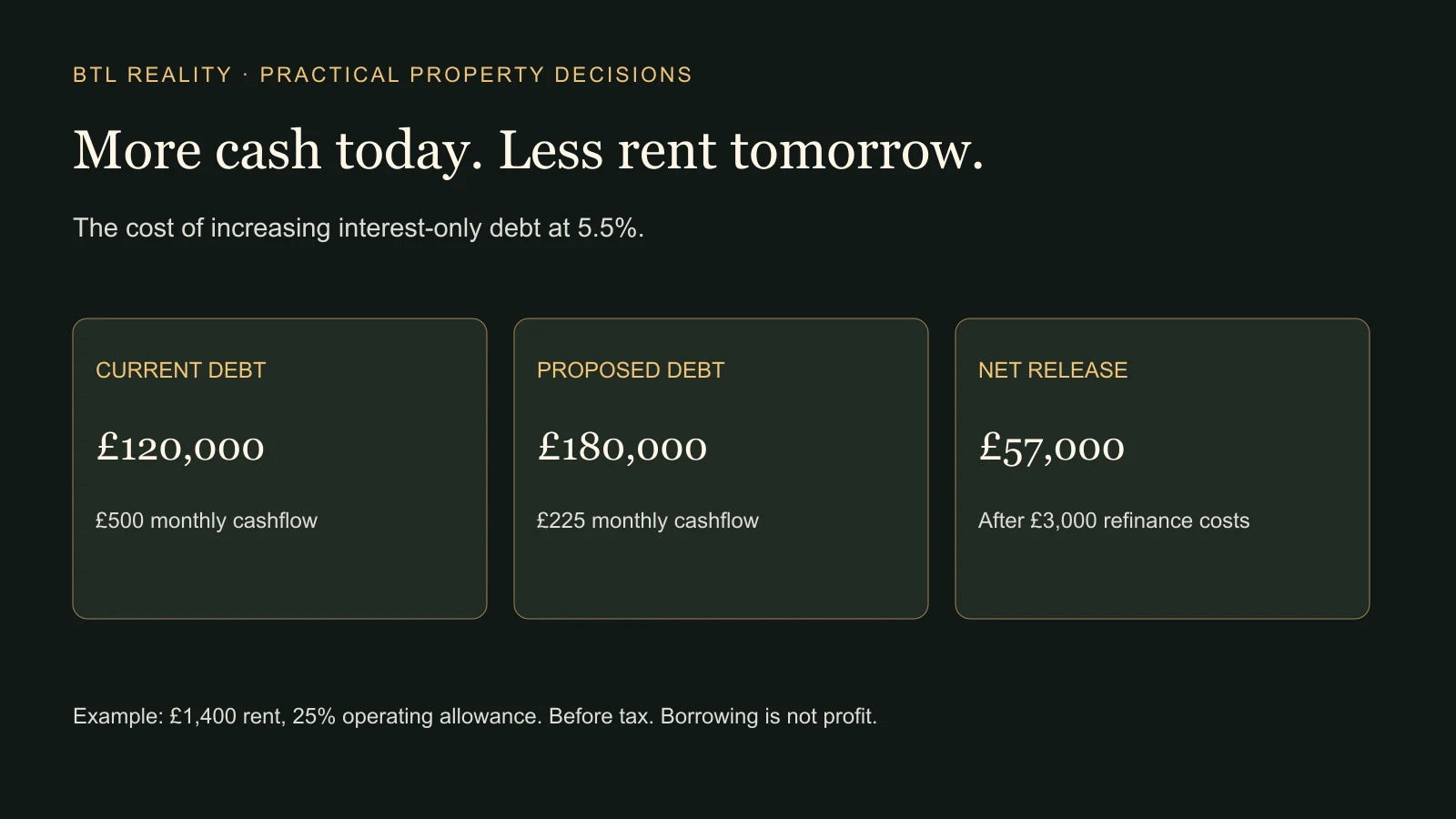
You should reconsider further refinancing when the extra borrowing no longer supports your objectives without making cashflow, reserves or future funding uncomfortable. A larger portfolio is not automatically a better portfolio, and money released today creates a liability that remains after the excitement of the next purchase.
There is no universal age, property count or loan-to-value at which every investor should stop. The useful decision is marginal: what would this additional borrowing fund, what does it cost and how resilient is the complete position afterwards? Sometimes another purchase is justified. Sometimes retaining income, reducing debt or simply waiting is the stronger move.
Revisit the objective before releasing equity
An investor building assets over several decades may make different choices from someone who wants reliable spending money now. If your objective has changed, the funding strategy should change with it. Continuing to refinance because it worked earlier can leave the portfolio serving an outdated plan.
Write the objective in practical terms: target income, time available, required reserve and acceptable exposure to future rates. “More properties” is a count, not a financial objective. It does not establish how much income you retain or how much uncertainty you can tolerate.
Mark's refinancing experience explains how borrowing can support portfolio development. That historical experience is not a promise that the same sequence remains right for every investor or every stage of ownership.
Calculate the cost of the next pound of debt
Suppose a property is worth £240,000 and has £120,000 interest-only debt. Refinancing to £180,000 releases £60,000 before fees and takes the LTV from 50% to 75%. At 5.5%, the additional borrowing costs £3,300 a year, or £275 a month.
If refinance costs are £3,000, only £57,000 reaches you under that simple structure. You still owe the full £180,000. Comparing a £57,000 opportunity with a “£60,000 release” would overstate the usable cash unless the costs are funded elsewhere and included in the total plan.
Ask what the £57,000 will do. A clear, evidenced investment or necessary financial purpose is different from borrowing because the lender's ceiling has increased. Idle borrowed cash can carry a cost even before another property is found.
Show the cashflow left behind
Assume £1,400 monthly rent and a 25% operating and ordinary void allowance. That leaves £1,050 before mortgage interest. At 5.5%, interest on £120,000 is £550 monthly, leaving £500 before tax. Interest on £180,000 is £825, leaving only £225.
At a hypothetical 7.5% rate, the higher debt costs £1,125 monthly. The original £1,050 after operating allowance would not cover it, creating a £75 monthly deficit before tax. The lower debt would still leave £300 under the same assumptions.
The purpose of this comparison is not to predict rates or reject borrowing. It is to show the recurring commitment created by the release. The new investment's performance must be assessed alongside that commitment, not in isolation.
Test another refinance against a cashflow floor
Use the worksheet to compare current debt with proposed debt at a common interest rate. Enter the minimum monthly surplus you want to retain. The resulting debt ceiling is based only on your stated cashflow requirement, not on lender eligibility or a complete personal affordability assessment.
What does more debt do to your income?
Interest-only illustration at a common rate, before tax. The cashflow floor is your planning input, not a lender assessment. Refinance fees reduce proceeds.
Calculations stay in your browser. Nothing you enter is saved or sent.
The model assumes interest-only borrowing, no change in rent and a percentage operating allowance. It excludes tax and costs not entered. Real refinance decisions should compare the actual old and new products, fees, early repayment charges and the use of proceeds.
Watch for several loans reaching a decision together
A portfolio can appear comfortable at today's blended interest rate while several fixed periods are due to end close together. List the outstanding balances, product end dates, current payments and plausible replacement scenarios for each loan.
The date matters because you may not be able to refinance every property on the terms expected. Values, assessed rents, lender criteria and personal circumstances can change. Interest-only loans also need a credible plan for repayment at the end of the term; repeated refinancing should not be treated as guaranteed indefinitely.
Our mortgage-deal-ending guide helps frame the review. Start early enough to examine options rather than making every decision under a funding deadline.
Keep reserves after the next purchase
Cash released through refinancing can look like a large reserve until it is committed to another deposit, taxes and works. Recalculate liquidity after the proposed transaction, not on the day the refinance proceeds arrive.
For example, £57,000 released and £52,000 committed to the next deal leaves £5,000 of new liquidity, not £57,000. If that next property needs more work than expected, you may have increased both debt and repair exposure while leaving only a small buffer.
The portfolio stress-test guide combines rate, rent and repair pressures. Add the proposed property and its costs before deciding that the existing portfolio's reserve is sufficient for expansion.
Debt reduction has a measurable benefit
Paying down £20,000 of interest-only debt at 5.5% reduces the annual interest bill by £1,100 before tax effects, provided the loan terms allow it and there are no offsetting charges. The monthly saving is approximately £92.
That is a relatively clear arithmetic benefit, but the cash becomes less accessible once paid into the property. Check overpayment allowances, early repayment charges and whether any redraw or flexible arrangement actually exists. Do not assume you can withdraw the money again at will.
Compare debt reduction with keeping cash for resilience or another purpose. The choice should use after-tax consequences where relevant and the real terms of the debt, rather than treating the mortgage rate as a universal net investment return.
You do not need an all-or-nothing answer
You could release less equity, retain more rental profit, stagger acquisitions or reduce borrowing on one property while holding another unchanged. A portfolio strategy can move gradually from expansion towards income without selling everything or repaying every mortgage immediately.
A partial refinance may fund a specific opportunity while preserving more cashflow. A period without purchases may allow reserves to recover after refurbishment. Paying down a particularly expensive loan may have a different effect from reducing the cheapest debt first.
Model each option with a clear reason and timeframe. “Wait” should include what evidence or financial threshold would cause you to reconsider, rather than becoming an indefinite pause with no plan.
Check whether an asset deserves more capital
Before using stronger properties to support a weak one, identify why it underperforms. Is the problem temporary, fixable at a sensible cost or structural? Borrowing elsewhere can conceal an issue without improving the underlying rental.
Compare realistic rent, maintenance, management, debt and time spent. A property with low cashflow may still have a role, but that role should be explicit. Do not keep it solely because selling would make a disappointing result visible.
Our return-on-equity guide helps assess income relative to equity currently tied up. It is one measure, not a verdict, and should sit beside sale costs, tax and future prospects.
Tax changes the comparison
All worked figures here are before tax. For individual residential landlords, finance-cost rules can cause taxable profit and cashflow to differ. HMRC's explanation of the finance-cost restriction is relevant when comparing extra borrowing with debt reduction.
Ask an accountant to model the position applicable to your ownership structure and circumstances. The tax treatment of borrowing can also depend on its use and the relevant rules. Do not assume every interest charge associated with a property has the same treatment.
Keep the cashflow plan intelligible even after advice is added: income, operating costs, full finance payments, tax provision and cash retained. A tax benefit does not make an unaffordable payment disappear.
A practical review before the next refinance
Record the proposed net proceeds, their exact purpose, the new payment and the reserve remaining after the money is used. Test a lower valuation and less favourable rate. Identify which other loans or works could create pressure at the same time.
Then compare the proposal with doing nothing and with a smaller release. The best option should improve the overall plan, not merely maximise the amount a calculator says could be borrowed.
For a more involved portfolio review, Private Mentorship explains the application route. The aim is a strategy that matches your circumstances, including when preserving income and flexibility matters more than acquiring another property.
Frequently asked questions
Is 75% LTV always too much debt?
No single ratio determines suitability. Rent, costs, reserves, loan terms and personal objectives matter. A lower-LTV property can still have poor cashflow, while higher borrowing can create less room for adverse changes.
Should I stop refinancing when I reach my income target?
Review the strategy at that point. Check whether the income is sustainable after realistic costs and tax, and whether further borrowing would improve or undermine the objective you have reached.
Is released equity income?
Refinance proceeds are borrowed cash, not rental income or a realised investment profit. They create repayment and interest obligations that belong in the continuing plan.