Letting Agent Fees for Landlords: Single Lets, HMOs and Holiday Lets
September 22, 2026
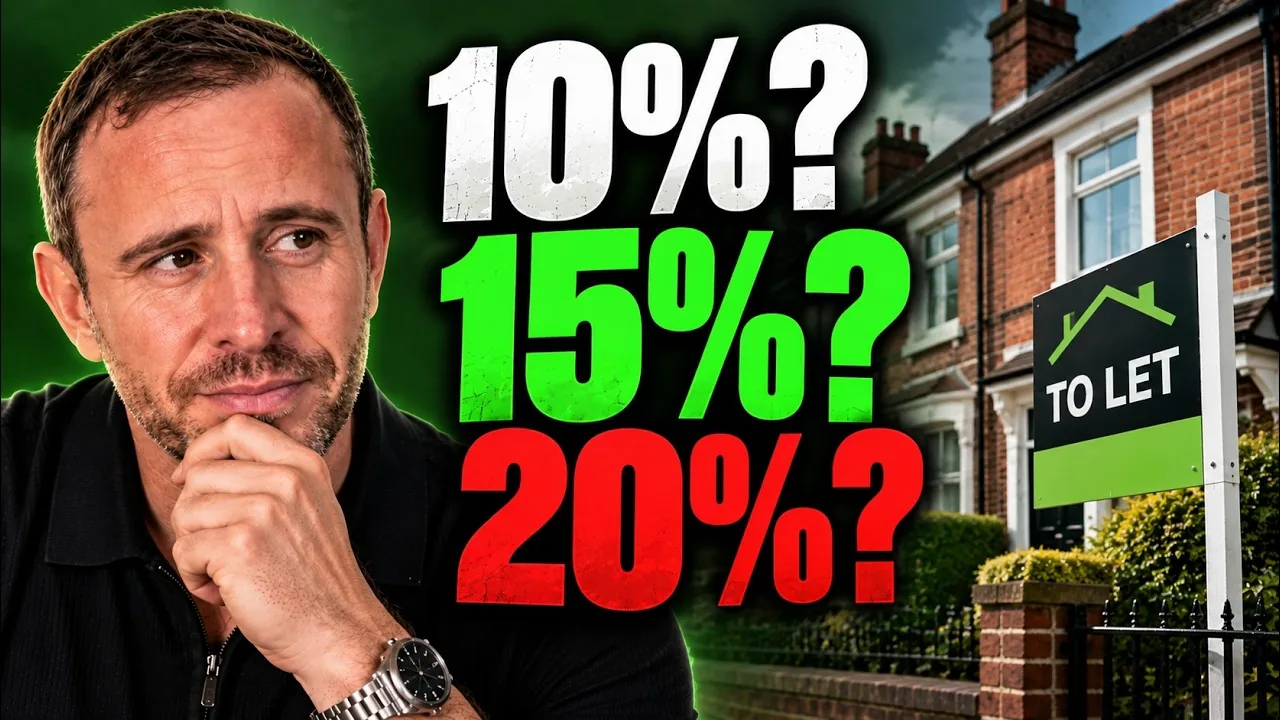
If you’re working out whether a rental property is a good investment, letting-agent fees need to be in the calculation before you buy. A rent of £1,000 a month isn’t £1,000 of income you can spend, and the difference between a headline management percentage and the actual bill can be surprisingly large.
For a normal single let, the range I discuss in my September 2026 video is roughly 10% to 15% of monthly rent for full management, before VAT where applicable. HMOs usually involve more work and higher charges. Serviced accommodation moves into a different type of business altogether, with guests, cleaning, booking platforms and frequent changeovers.
I’ve been investing in UK property for around 15 years and own more than £3.5 million worth of property. I also co-own a sourcing and letting business, so this is something I see from both sides. Across my own portfolio, I pay around 10% for single-let management and 15% for HMO management. Those are my arrangements, not a promise of the quote you’ll receive.
You can also watch my letting-agent fees video on YouTube.
How much does a letting agent charge for a single let?
A single let is the simplest place to start: one property let to one household. The agent’s full-management fee is commonly expressed as a percentage of the monthly rent. In the video, I use a working range of 10% to 15%, with VAT added where the agent charges it.
These are budgeting guides from my experience, rather than a fixed national tariff. Your area, the service offered, the property and the number of properties you place with an agent can affect the quote. What matters is getting a written breakdown for the actual property you’re considering.
Let’s take £1,000 monthly rent and a management fee of 10% plus VAT at 20%. The management charge is £100, the VAT is £20, and the total is £120 a month. Over a full year with the same rent and charge, that’s £1,440.
At 15% plus VAT, the same calculation gives £180 a month, or £2,160 a year. That is a £720 annual difference. It doesn’t tell us which agent offers better value, but it does show why a few percentage points deserve attention when the property’s cash flow is tight.
When you see me use 10% in a property calculation, that reflects my own management arrangement. For your spreadsheet, put in the total cost that will actually leave your account. If a quoted percentage excludes VAT, don’t quietly leave the VAT out of the investment calculation.
Tenant-find-only fees versus full management
You can also pay an agent to find a tenant and then manage the tenancy yourself. Typically, that initial service involves marketing, viewings, referencing and getting the tenancy set up. The exact package still needs checking: the phrase “tenant find” doesn’t automatically tell you every document, visit or follow-up included.
In the video, I discuss tenant-find-only charges of around 8% to 12% of the first year’s rent. On £1,000 a month, the annual rent is £12,000. Applying that range gives £960 to £1,440 before any applicable VAT. That’s the precise arithmetic behind the broad example in the video.
Other agents may quote a fixed amount or use a different charging basis. Compare the total bill, when it is due and what happens if the tenancy doesn’t proceed. A percentage isn’t particularly helpful until you know what it is a percentage of.
After the tenant moves in, tenant-find-only generally means the ongoing management is yours. Someone still needs to deal with maintenance, organise the appropriate checks, respond to problems and keep track of the tenancy. Paying to introduce a tenant doesn’t remove that work.
For one property, with plenty of time and a willingness to learn, managing it yourself can make sense. I don’t dismiss that approach. But as the portfolio grows, the same decision can turn into another job. Once you’ve got ten or fifteen properties, you need to be honest about whether that’s the job you want.
Why HMO management usually costs more
An HMO can involve several tenants renting individual rooms, with people moving in and out at different times. That creates more moving parts than one household occupying a single let. There are shared areas, additional wear and tear and more individual relationships to manage.
On my own HMOs, I pay around 15% for full management. I’m comfortable with a higher percentage because the work involved is different. In the video, I suggest roughly 15% to 17% as a guide to investigate, then replace with real quotes.
A higher gross rent doesn’t mean every extra pound is profit. The management structure needs to fit the actual letting arrangement, and the property still needs allowances for its other running costs. If you’ve been comparing houses with more intensive strategies, my article on buy-to-let investment strategies provides useful context.
Tenant-finding fees can also work differently for an HMO. The range I discuss is around 100% to 150% of one month’s room rent, per room, plus VAT where applicable. You’re paying for several separate tenant placements rather than a single household moving into the whole building.
For illustration, take a room renting at £500 a month. A fee equal to one month’s rent would be £500 before VAT; 150% would be £750. If five rooms needed tenants on that basis, the combined initial charges would be £2,500 to £3,750 before VAT. That is an example of the calculation, not a quote for your property.
It’s worth seeing those amounts as cash leaving the business, rather than just percentages in a fee schedule. Ask whether tenant placement is included in the management package or charged separately, and how replacement tenants are treated.
Serviced accommodation is a different level of management
With serviced accommodation, you’re moving closer to running a small hotel. There can be listing management, guest questions, pricing changes, check-ins, cleaning, linen, reviews and problems during stays. The number of different guests passing through a property can make the workload very different from a conventional tenancy.
The range I discuss for full management is approximately 15% to 25% of booking revenue. I have a property in France where I pay 25% for management. That’s a personal example, not a claim that the same arrangement, tax treatment or service applies to a UK property.
This is where comparing two percentages can be particularly misleading. Is the manager charging on the gross booking revenue or on the amount remaining after the booking platform has taken its fee? Is cleaning included, charged to the guest or paid separately by you? Who pays for linen and consumables?
Then look at photography, software charges and maintenance. Does the manager add a margin when organising repairs? Are there minimum charges? What happens during a quiet month? Those details can make more difference than a small gap between the advertised management percentages.
For example, 20% of £2,000 gross booking revenue is £400. If a different contract applied 20% to £1,700 after specified deductions, it would be £340. The arithmetic is simple, but the contracts aren’t necessarily offering the same service. You need to compare both the charging base and the exclusions.
What I would put into an initial investment spreadsheet
Before I have actual quotes, I’d use roughly 10% to 12% for a straightforward single let, around 15% for an HMO, and about 20% to 25% for serviced accommodation as starting assumptions. These are the planning figures I describe in the video, not substitutes for local pricing.
I’d then add any VAT and separate costs that apply. For serviced accommodation especially, that means checking cleaning, platform fees and the other expenses sitting around the management charge. A spreadsheet can look very attractive when half the costs haven’t made it into the cells.
My £1,000 rent cash-flow example shows why I work through the money left after finance, management and running costs. The rent at the top of the calculation is only the beginning.
I also include management in the numbers even if I initially intend to manage a property myself. If the deal only works because I’m providing my time for nothing, I’ve made myself part of its financial structure. That may suit me today, but it reduces my options later.
Compare the service as well as the fee
I want a clear explanation of what the agent does, what costs extra and how the agreement ends. Before choosing, I’d ask about inspections, maintenance authorisation, reporting, tenant placement and any renewal or termination charges. Get the answers in writing so you can compare the same things.
The lowest quote isn’t automatically the cheapest outcome. Equally, a higher fee doesn’t prove that the service is better. The question is whether the arrangement gives you the work, communication and oversight you need at a cost your investment can support.
For the tax side, HMRC’s guidance on working out rental income includes letting and management fees among the expenses to consider. The tax calculation is separate from deciding whether the cash flow works, and your accountant should apply the rules to your circumstances.
Budget for the portfolio you want to own
My aim is to own investments that can be managed properly without creating another full-time job for me. That is why I’m willing to pay for management and why I put it into the calculation at the start.
If you’re buying your first property, you may reasonably want to learn the management side yourself. Just leave room in the numbers to hand it over later. That gives you a choice when your work, family or portfolio changes.
If you’d like to work through your own property plan, book a free 30-minute strategy call. You can also explore the Starter Club or Done For You service. Start with the actual costs, understand the service you’re buying and make sure the property still works after paying for it.