Landlord Insurance Rebuild Value: Are You Underinsured?
September 25, 2026
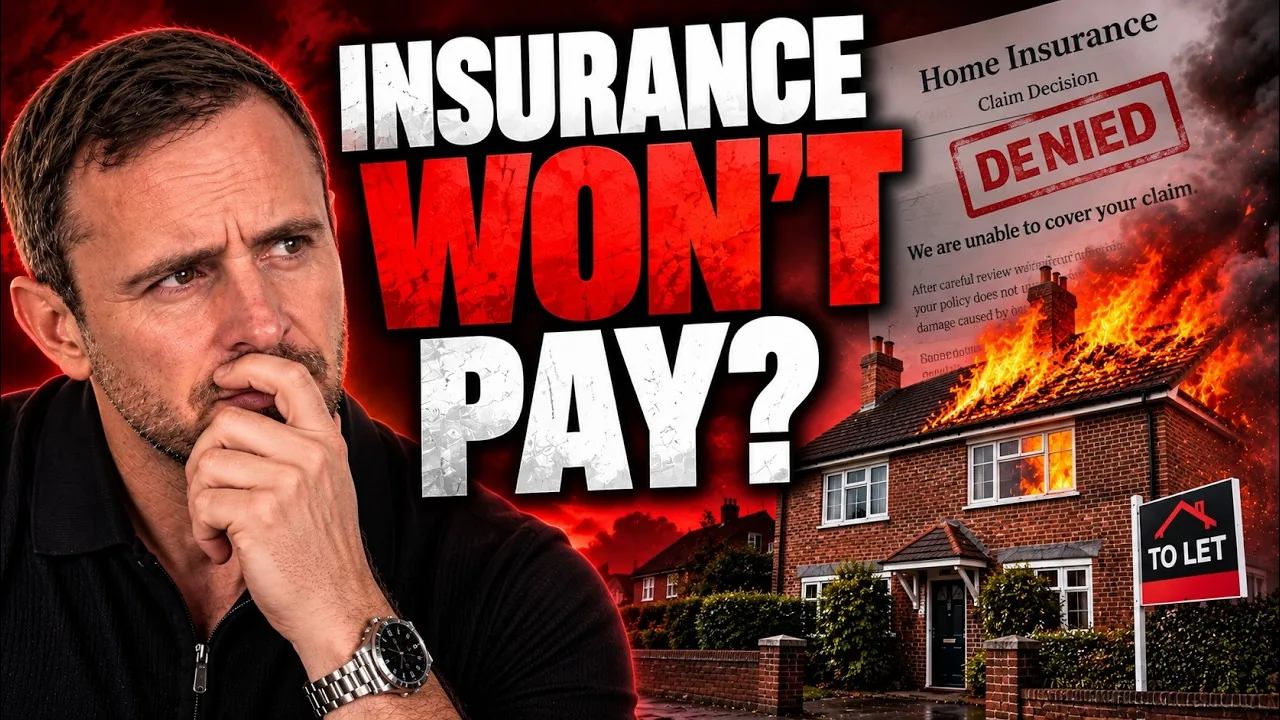
The number I pay most attention to on a landlord insurance renewal isn’t always the premium. It’s the rebuild value: the amount the policy is based on for putting the building back if something goes badly wrong.
I was recently renewing cover on a four-bedroom rental house that I think is worth around £450,000. Following my broker’s advice, I increased its insured rebuild value to £500,000. That might sound odd if you assume insurance should match what you could sell the property for, but the two figures measure different things.
The renewal prompted me to look more closely at underinsurance and rising construction costs. I’ve been investing in UK property for around 15 years and own more than £3.5 million worth of property. Even so, this was a reminder that a fairly dull piece of paperwork can expose a risk worth much more than a small saving on the annual bill.
You can also watch my landlord insurance and rebuild-cost video.
Market value and rebuild value answer different questions
Market value is about what a buyer would pay for the property. That includes the building, the land, the location and the demand to live there. Two similar houses can sell for very different amounts because buyers value the areas differently.
Rebuild value asks what it would cost to replace the building following an insured loss. Depending on the assessment and policy, that involves demolition, clearing the site, materials, labour and professional costs, as well as the construction itself. The land may still be there after a fire, but reconstructing the building is a substantial undertaking.
The two numbers therefore don’t have to move together. A low purchase price doesn’t necessarily mean a cheap rebuild, and a high market value doesn’t mean the whole amount represents construction cost. Copying the sale price into an insurance form can answer the wrong question.
This is particularly easy to see with cheaper properties. A large part of the difference between locations comes from land values and demand. Bricks and the work needed to rebuild a house don’t become proportionately cheaper simply because buyers pay less for homes in that street.
Why a £120,000 house could need much more cover
In the video, I use a small house in Sheffield as an example. A property might have a market value around £120,000 to £125,000 yet require something like £300,000 to rebuild. That is an illustration of how different the figures can be, not a professional assessment of every house at that price.
The point isn’t that you should automatically insure a £120,000 house for £300,000. Replacing one guess with another doesn’t solve the problem. You need a figure based on the actual building, the policy’s requirements and an appropriate assessment.
Size, construction, access and unusual features can change the work involved. A simple-looking property can still present practical complications when demolition and rebuilding are considered. I would rather get the basis right than use a neat rule that happens to produce a reassuring number.
If you’ve bought well, the purchase price may be even less useful as a guide. My approach to buying below market value is about negotiating the investment price. That doesn’t mean the insurer can rebuild the house at the discount I negotiated with its previous owner.
What the underinsurance research actually tells us
The research discussed in my video came from RebuildCostASSESSMENT. Its published findings report that 67% of the residential and commercial properties assessed were underinsured. The company’s current summary describes more than 46,000 assessments; the video rounds the sample to nearly 47,000.
That is a finding about the assessed sample. It does not establish that exactly 67% of all homes in Britain, or 67% of every landlord’s portfolio, has inadequate cover. I make that distinction in the video because a striking headline can otherwise sound more precise than the evidence supports.
What it does give me is a reason to check my own figures. I don’t need to assume my property is wrong because somebody else’s was. I need to know how my number was arrived at and whether it remains suitable.
Rebuilding costs have also changed substantially over recent years. In the video I refer to a roughly 40% increase reported from BCIS data. The practical lesson isn’t to increase every policy by 40% now: the relevant dates, the building and any adjustments already made to the cover all matter.
If a policy has already been updated, applying a historical rise again could give the wrong result. If it has simply carried an old guess forward, a modest annual change may not fix the underlying problem. The starting assessment and the subsequent updates both deserve attention.
Underinsurance can affect a partial claim too
The detail that particularly caught my attention was the potential effect of an average clause. Underinsurance isn’t only a concern when the whole building is destroyed and the total cost exceeds the sum insured.
Imagine a property with a correct rebuild cost of £400,000 that has been insured for £200,000. On those figures, only half the required amount has been insured. Now imagine damage costing £100,000 to repair. You might assume the claim is comfortably within the £200,000 limit.
Depending on the policy and circumstances, an average clause could reduce the payment proportionately. In a straightforward 50% illustration, a £100,000 claim might be reduced to £50,000 before considering an excess or other adjustments. That is a potential outcome, not an automatic rule for every claim.
The Financial Ombudsman Service’s explanation of underinsurance describes the issue and how disputes are assessed. The questions asked by the insurer, the answers given, the policy terms and the evidence can all matter. I wouldn’t assume the result from one simplified example applies to every landlord policy.
For me, the important change in thinking is that the rebuild figure can matter even when the damage costs less than the headline cover. That makes understanding the policy more useful than just checking that the insured amount looks large.
My £500,000 rebuild-cover example
For the four-bedroom house discussed in the video, the annual premium is £481.14 and the rebuild value is £500,000. That works out at approximately £40.10 a month. Dividing the annual premium by five gives about £96.23 for each £100,000 of that stated rebuild amount.
Those calculations describe my policy. They are not a pricing formula for another property. Insurance isn’t sold at a universal price per £100,000: the insurer considers the particular risk and the cover being provided.
Your postcode, building, use and claims history can produce a different result. A standard rental house, an HMO and serviced accommodation may need different arrangements. The details should accurately reflect how the property is actually occupied and managed.
I also wouldn’t suggest that my premium proves my policy is the best one available. I’m using it because a real number is helpful. In my case, paying around £481 a year to insure a building on a £500,000 rebuild basis feels reasonable, provided the cover and terms are appropriate.
Why I care more about the right cover than saving £50
I’m happy to negotiate hard when buying a property. Saving £10,000 on the purchase price can make a meaningful difference to the investment. I spend time understanding value because the size of that decision justifies it.
Saving £50 a year on an insurance premium doesn’t excite me in the same way, particularly if the apparent saving comes from weakening the cover or using the wrong rebuild amount. A cheaper bill can be a poor result if a claim leaves a much larger gap.
That doesn’t mean price is irrelevant. Compare suitable policies and understand what you’re paying for. But compare the same cover, excesses, limits and conditions before deciding that one price is better than another.
This is the same thinking I apply to the wider costs behind rental cash flow. A return looks better if I remove necessary expenses from the spreadsheet. That doesn’t make the property a better investment; it makes the spreadsheet less useful.
What I would check on an existing policy
Start with the documents and find the figure relating to rebuilding or reinstatement. Check what the policy calls it and whether there are separate declared values, sums insured or allowances. If the terminology isn’t clear, ask the broker to explain which figure you are responsible for supplying.
Then establish where the number came from. Was it a professional assessment, an appropriate estimate or simply the amount paid for the house? Has the property changed since then? An extension, a conversion or other work can make an old assessment less useful.
I’d also ask how the policy deals with changes in costs over time and whether an average clause applies. The aim is to understand the arrangement before a loss, while there is time to correct information or obtain an assessment.
If an online calculator is being considered, check that it is suitable for the building. Unusual or complex properties may need a different approach. I wouldn’t treat a convenient estimate as a substitute for specialist advice where the property falls outside its assumptions.
Keep the supporting documents and the broker’s explanation with the policy. That creates a clearer basis for the next renewal, instead of leaving you trying to remember why a particular figure was chosen several years earlier.
A small review that protects a larger investment
I started looking at this because of one renewal. It led me to check the wider portfolio, which is a much better outcome than simply accepting the next premium and putting the documents away.
I don’t expect every investor to become an insurance specialist. I do think we should know what our important numbers mean and recognise when to ask for help. Rebuild value is one of those numbers: it deserves its own assessment, separate from what the house might sell for.
If you’d like to discuss your wider property investment plan, book a free 30-minute strategy call. You can also explore the Starter Club or Done For You service. For the insurance itself, take the actual policy and building details to your broker. The useful next step is understanding your cover, not copying mine.