Investing vs Gambling: How I Tell the Difference
May 13, 2023
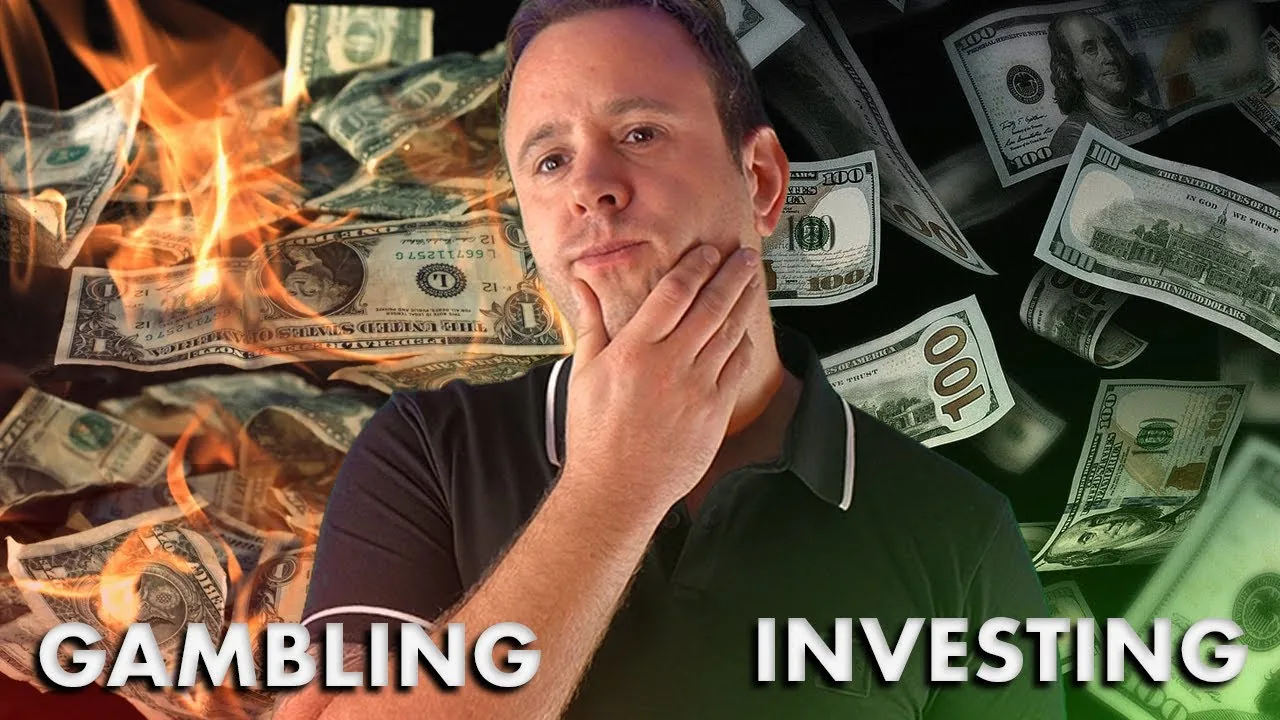
The difference between investing and gambling isn’t always obvious from the name of the asset. You can buy something normally described as an investment and approach it as a short-term bet. You can also own a productive asset while taking far more risk than the word investing suggests.
I filmed my May 2023 discussion of this subject in Las Vegas, which seemed an appropriate place to ask the question. My approach was deliberately opinionated: I prefer diversified ownership, an understandable source of income and a long-term plan over trying to predict the next winner.
That is a way of judging decisions, rather than a promise that my preferred investments cannot lose money. The distinction I care about is what the return depends on, how much uncertainty I’m accepting and whether I understand the consequences if I’m wrong.
You can also watch my original investing versus gambling video.
Why I stopped trusting my ability to pick winning shares
In the video, I said I had tried to assess individual companies by reading balance sheets, profit-and-loss information and annual reports. I run businesses, so it wasn’t unreasonable to think I might understand something useful about a company.
But understanding a business isn’t the same as being able to predict which share will outperform the wider market. The future includes events outside the company’s accounts and outside my ability to forecast. I used the pandemic and the war in Ukraine as examples of events I hadn’t predicted.
My conclusion was personal: I didn’t believe I could consistently pick the winners well enough to base my plan on doing so. I’d rather acknowledge that limit than assume confidence or effort automatically gives me an advantage over other market participants.
That doesn’t mean every purchase of an individual share is literally a casino bet. An investor can research a company and own a real part of a productive business. My point was that, for my own approach, concentrating on a chosen winner introduced a prediction I wasn’t comfortable relying on.
What I prefer about a broad index fund
An index fund gives exposure to a defined group of investments rather than asking me to choose one company that must succeed. Its objective is to track the relevant index, with actual performance affected by costs and tracking differences.
That suits my preference for participating in economic activity without needing to identify the single best business in advance. I can own a share of many companies and accept that some will do better than others.
It still matters which index I choose. A broad global index, a national index and a narrow sector index don’t provide identical diversification. A fund can hold many securities and still have significant concentration in a country, sector or a small group of large companies.
I’d also distinguish buying a fund from trading a derivative that refers to an index. The fact that both products mention the same market doesn’t make their risks, costs or mechanics equivalent. I want to understand what I actually own.
The FCA’s explanation of diversification is a useful official guide to spreading exposure. Diversification can reduce dependence on one outcome, but it doesn’t remove market risk or guarantee a positive return.
An index doesn’t protect you from every losing company
I used an automotive example in the video to explain why I didn’t want everything resting on one manufacturer’s success. If all my money were in a single company and it failed, the damage could be severe. A broader holding reduces that dependence.
However, an index isn’t a system that reliably sells every company before it loses value. In a market-capitalisation-weighted index, a company’s weight changes as its market value changes, and the fund follows its methodology. It can still hold a company through substantial losses.
Nor does an index necessarily buy additional shares simply because the price rises. Some changes in weight happen through the price movement itself. The important point is the overall exposure and the rules, rather than a story in which the fund always moves ahead of trouble.
I prefer the broader approach because I don’t need one forecast to be right. That is a reduction in a particular type of risk, not an escape from risk altogether. If the whole market falls, a fund tracking that market can fall with it.
Property can also be approached as a bet
With property, my preference is to own an asset that provides accommodation and can generate rent over time. I can assess a purchase price, investigate demand, estimate costs and decide whether the investment fits my plan.
But ownership alone doesn’t make a deal sensible. If I overpay, underestimate repairs or borrow on terms the income can’t support, I can still create a very risky position. Calling it bricks and mortar doesn’t repair the calculation.
I also want to distinguish the two possible sources of return: rental income after costs, and changes in the property’s value. They’re connected, but neither is guaranteed. A house can have tenants and still produce little cash after expenses, or rise in estimated value while creating immediate cash-flow pressure.
The useful question is what happens if the hoped-for growth doesn’t arrive. Does the property still function as an investment I can afford to hold? Or does the whole deal depend on somebody paying substantially more within a short period?
My article on buy-to-let profit from £1,000 rent explains why the rent at the top of the calculation isn’t the amount available to spend.
Why I spread my property exposure geographically
In the video, I described having properties in different parts of the country. My thinking was that different locations can offer different combinations of income and growth, and I didn’t want the entire result dependent on one market.
That doesn’t make a small property portfolio equivalent to a broad index fund. Individual buildings have their own repair issues, tenants, financing and management arrangements. Transaction costs also make it harder to change the allocation quickly.
Still, the diversification principle is useful. If every property serves the same employer or tenant group, they may all be affected by the same disruption. Several addresses don’t necessarily mean several independent sources of risk.
I’d want the benefit of geographical spread to justify the extra complexity. More areas can mean more local knowledge to acquire, more management relationships and less convenience when something needs attention. Diversification should be deliberate, rather than collecting locations without understanding them.
Rent-to-rent has a different business risk
I was more critical of rent-to-rent in the video. My concern was that the operator can take on a continuing rent commitment while depending on being able to earn more by letting the accommodation in another way.
For example, paying £1,000 a month to a landlord and collecting £2,000 from guests creates a £1,000 gap before operating costs. It doesn’t establish a £1,000 profit. Management, cleaning, utilities, vacancies and other expenses can absorb a significant part of the difference.
The operator also depends on permissions and the contract. The arrangement may have an end date, and the owner may not renew it. Changes in the ability to use the property as intended can affect the business while payment obligations remain.
I called that gambling as a strong expression of my preference for owning the underlying asset. More precisely, it is an operating business with contractual and demand risks. Some people run it successfully, but I don’t want the apparent lack of a purchase deposit to hide those commitments.
Before considering it, I’d want clear permission for the intended activity, realistic costs and a plan for weak demand. A cheap route to starting isn’t necessarily a low-risk route to continuing.
A long holding period doesn’t guarantee property gains
I expressed a strong belief in long-term property ownership. That belief is part of why I invest, but it shouldn’t become a claim that every property must rise or that waiting automatically solves a poor purchase.
A particular area can weaken, a building can need expensive work and the cost of finance can change. Inflation can influence property economics, but it doesn’t force every property’s price to rise at the same pace or on a timetable that suits the owner.
Even a long-term investor needs enough cash to remain invested. If the costs become unmanageable, the intended holding period may end earlier than planned. That is why I care about reserves and financing as well as the asset itself.
I used a roulette comparison in the original discussion to make the idea of rent and capital growth memorable. The analogy has limits: property isn’t a wheel that eventually guarantees a win. Both the income and the eventual sale result need proper assessment.
My view on cryptocurrency was sceptical
I also explained why I didn’t regard cryptocurrency as fitting my preferred investment approach. I could see uses for the underlying technology, but that didn’t automatically give me a convincing reason to expect a particular token to produce a dependable financial return.
That distinction is important. A technology can be useful without every asset associated with it being a good investment at any price. I want to understand how value reaches the owner and what supports the price beyond another buyer’s willingness to pay more.
The video included strong opinions about future currencies and the role of governments. Those were opinions, not established forecasts. I wouldn’t build a personal plan on claiming certainty about which technology or currency will dominate in the future.
For my own decision, I was more comfortable with investments where I could identify productive activity and assess the income or ownership interest. Somebody choosing a speculative exposure still needs to be clear that speculation is what they’re doing.
Entertainment and wealth building have different purposes
In Las Vegas, I described having a small go on a slot machine and being pleased with a win. That was entertainment, with money I was prepared to lose. It wasn’t evidence that I had discovered a repeatable method of earning income.
The distinction matters because a lucky outcome can encourage the wrong conclusion. Winning once doesn’t establish skill, and losing once doesn’t necessarily disprove a sensible long-term investment process. The quality of the decision and the short-term result aren’t identical.
Personally, I said I would get more satisfaction from adding to an investment than putting a larger amount into a machine. That reflects what I enjoy and what I’m trying to achieve. There is no need to dress entertainment spending up as a financial strategy.
Ask what the return actually depends on
Before committing money, I want to explain the source of the expected return in plain language. Who pays, why do they pay and what could prevent it? I also want to know the costs, the possible loss and how easily I can access the money again.
Then I ask whether the decision fits the wider plan. A concentrated position, leverage or a short deadline can make an otherwise familiar asset much riskier. The label on the product doesn’t answer those questions for me.
My property investment planning article puts that objective first. I want ownership and a process I understand, with realistic expectations and enough resilience to handle outcomes I can’t predict.
If you’d like to discuss your property approach, book a free 30-minute call. You can also explore the Starter Club or find out about Done For You.