Are Property Investment Courses Worth It? My Checks
November 19, 2021
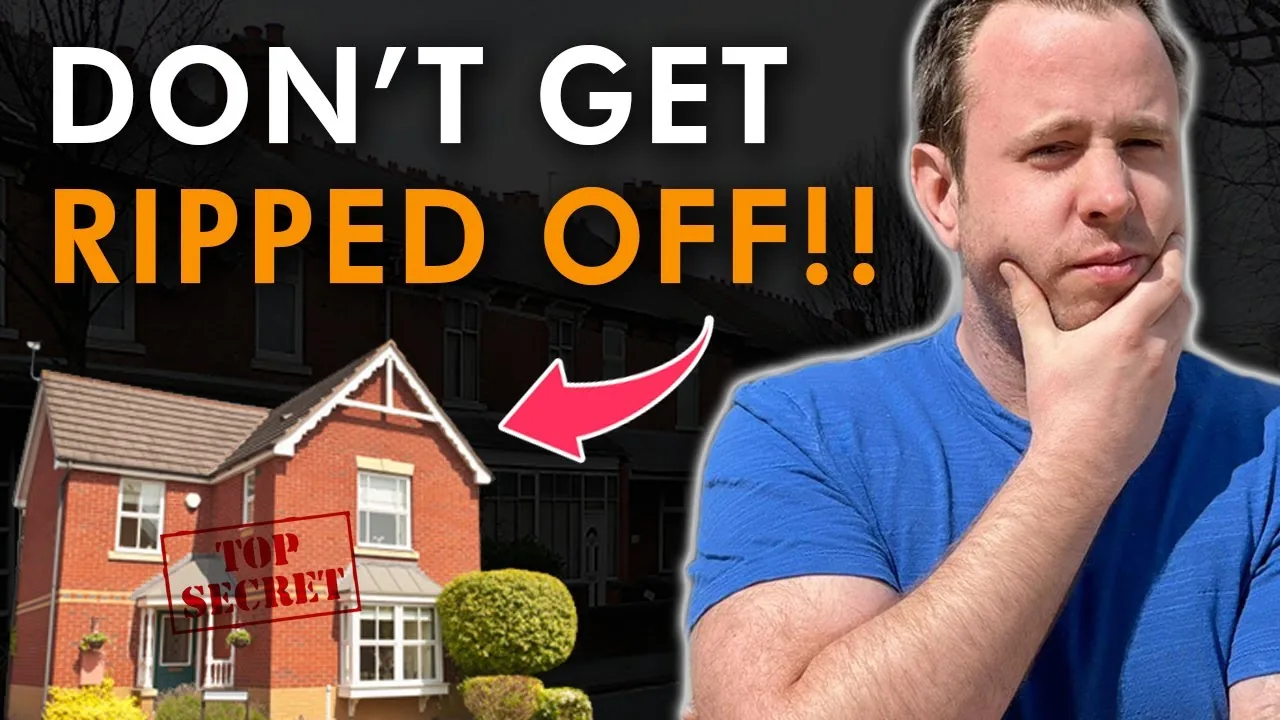
Are property investment courses worth it? My answer is that education can be valuable, but the fact that somebody sells a course doesn’t tell me whether they can teach, whether they understand the subject or whether the opportunity they’re promoting suits the person buying it.
In my November 2021 video, I raised several concerns about property education. I wasn’t saying every provider was poor, and I didn’t name individual businesses. I wanted people to ask better questions before spending money, especially when the sales message involved a quick route into a new property business.
The central issue for me is the difference between buying information and developing the ability to make good decisions. Those aren’t always the same thing, and the price of a programme doesn’t establish which one you’re getting.
You can also watch my original discussion of property education.
Start with the teacher’s relevant experience
My first concern was people teaching a subject they had barely practised. In the video, I described seeing people move into property education after very limited experience, sometimes without completing the type of investment they were presenting themselves as able to teach.
I want to know what somebody has actually done. Have they bought and managed the type of property being discussed? Have they dealt with a project that went wrong? Can they explain how their decisions changed when the market or the costs changed?
A successful transaction can provide useful knowledge, but it doesn’t automatically establish broad expertise. Repeating a method through different circumstances can reveal problems that a first deal, particularly in a favourable market, never exposed.
I’d also distinguish subject knowledge from teaching ability. Somebody might be a capable investor and still struggle to explain their reasoning. A useful educator needs to make the decision process understandable, identify what the learner hasn’t understood and help them apply the principles to a different situation.
That doesn’t mean demanding that everybody has experienced every possible problem. It means looking for evidence that the experience matches the claim and that the limits of that experience are acknowledged.
Ask what you’ll be able to do afterwards
A course title can sound impressive without making the outcome clear. I’d want to know what practical decisions or tasks I should be able to handle by the end, and how the programme helps me get there.
For example, learning the vocabulary of a refurbishment is different from being able to assess a quotation, build a realistic budget and recognise when specialist advice is required. Being shown a completed deal isn’t the same as understanding the rejected alternatives and the checks that happened before purchase.
I’d ask whether the material includes unsuccessful or difficult examples. Those can be particularly valuable because they show where a method breaks down. A presentation made entirely from the best results may leave you unprepared for the ordinary uncertainty of investing.
I’d also look for a clear distinction between what is taught and what remains your responsibility. Education doesn’t make a lender approve finance, a seller accept an offer or a tenant pay the rent. It should help you assess those situations more competently.
Class size changes what support is possible
My second concern was the size of some training events. In the video, I contrasted a large conference audience with smaller settings where an educator has more opportunity to respond to individual questions.
I used class-size comparisons to explain my preference. They were my judgement about the learning experience, not a universal scientific rule that one exact number works and another cannot. Different formats can serve different purposes.
A large event can introduce ideas and give you information. It may also be enjoyable and motivating. But I’d be careful about assuming it provides the same personal feedback as a much smaller group or a one-to-one discussion.
The useful question is what access you actually receive. Can you ask about your own calculation? Will somebody explain why an assumption is weak? Is feedback included, or does the advertised course mainly lead to another paid level of support?
I’d want that established before paying. If the offer is mainly recorded material or a large presentation, it should be evaluated on that basis. The problem arises when the expected personal guidance is very different from what is delivered.
A business opportunity needs customers, not just a course
The third concern was the promise of becoming a property deal sourcer. In the video, I described a conversation with a company that said it wanted to train around 100 new sourcers a month. That made me question how many buyers would support the resulting businesses.
At 100 people each month, one provider would train 1,200 in a year. That’s straightforward arithmetic. It doesn’t establish how many would enter the market, succeed or remain active, but it does raise a practical question about demand.
A deal-sourcing business needs more than the ability to identify an advertised property. It needs investors willing to pay for a service, properties that meet their requirements and a process that can deliver reliably. Training more suppliers doesn’t automatically create more paying customers.
If I were buying that type of course, I’d want to understand the customer before becoming excited about the potential fee. Who pays? Why would they use me? What problem am I solving? How would I establish credibility and find those customers?
Those are commercial questions. They can’t be answered simply by multiplying an attractive fee by the number of deals I’d like to complete each month.
Treat market-size estimates with care
In the original video, I worked through a rough estimate of the market using transaction figures, mortgage activity, cash purchases and assumptions about how many investors might use a sourcer. It was an exploratory calculation, not a measured count of available customers.
Several assumptions were uncertain. Mortgage approvals aren’t identical to completed purchases, cash buyers don’t all have the same purpose, and the proportion willing to pay a sourcing fee wasn’t established. The resulting estimate shouldn’t be treated as a precise limit on the number of viable businesses.
The point I wanted to make remains useful: test whether the demand story supports the sales story. If a provider promotes a large number of new businesses entering a market, ask what evidence shows there is room for them and how the graduates are expected to compete.
I’d be especially cautious about replacing missing evidence with a confident percentage. A spreadsheet can produce a neat answer from assumptions that are doing most of the work. The certainty of the final number doesn’t improve the quality of those assumptions.
A better exercise is to investigate actual prospective customers, competing services and the work required to win business. Even a small amount of grounded research can be more useful than a very large market estimate with no clear route to a buyer.
Ask about the whole business, including obligations
If a programme teaches a business activity, I’d want it to cover the practical obligations as well as the sales pitch. Property sourcing can involve estate agency activity and associated requirements; it isn’t simply an informal introduction followed by a fee.
HMRC’s guidance for estate agency businesses is an official starting point for understanding the money-laundering supervision side. The requirements depend on what the business does, so the activity needs to be assessed properly.
I wouldn’t expect a short course to replace every professional adviser. I would expect it to identify important areas that need attention rather than make them disappear from the business model. Compliance, contracts, customer expectations and the cost of operating all affect whether the opportunity is workable.
The same thinking applies to a course about HMOs, refurbishment or another strategy. Does it explain the limits of the method and the checks required, or does it mainly show the attractive result after everything has gone well?
Be particularly careful about borrowing for education
My fourth concern was people taking on substantial debt to buy information before they had tested whether the intended activity suited them. The repayment obligation can begin long before a new business produces dependable income.
I don’t think the first step always needs to be an expensive programme. Books, freely available material and careful initial research can help you understand the basics and identify what you still need to learn. The quality varies, so free information needs scrutiny too.
In the video, I used my YouTube channel as an example of testing a direction before investing further. I started in January and brought Nick in later, in March, after I’d begun to establish whether the idea was worth developing. That was my example of proving a concept, rather than funding the whole operation immediately.
A property strategy won’t always allow the same small steps, but the principle still applies. Learn enough to understand the decision, test what can reasonably be tested and then decide whether more specialised help has a clear purpose.
Borrowing doesn’t make a poor course useful, and enthusiasm doesn’t make the repayments disappear. I’d want to understand the commitment independently of the provider’s most optimistic income example.
Compare the offer with the gap you actually have
Sometimes a focused piece of help can be more useful than a broad programme. If you understand the basics but can’t assess a particular issue, identify that issue clearly. You may need technical advice, feedback on a calculation or experience in a specific strategy.
That is different from buying another collection of general information because you’re nervous about taking any next step. Education should move you towards a better decision. It can become a form of delay if each purchase leads only to another purchase.
I’d write down what I already understand, what remains uncertain and which uncertainties matter before committing money. Then I’d compare the proposed support with that list. A clear match makes it easier to judge value than a long list of bonuses or a limited-time offer.
My property investment planning article can help organise the broader objective. Knowing what you want to achieve makes it easier to choose relevant education instead of collecting disconnected strategies.
Good education should improve your judgement
My concern isn’t with paying for useful expertise. It’s with promises that encourage people to spend before understanding the teacher, the support, the market or their own circumstances. A confident presentation isn’t enough evidence on its own.
I’d choose education that helps me ask better questions, recognise weak assumptions and understand when I need further advice. I also want the provider to be honest about who the programme is suitable for and what it cannot guarantee.
If you’re looking at a specific property opportunity, the same discipline applies to the deal itself. My article on property price and market value explains why an attractive headline needs supporting evidence.
If you’d like to discuss where you are in your property journey, book a free 30-minute call. You can also explore the Starter Club or find out about Done For You and assess whether the support fits what you need.