Property Refurbishment Mistakes: How Good-Looking Projects Lose Money
January 17, 2025
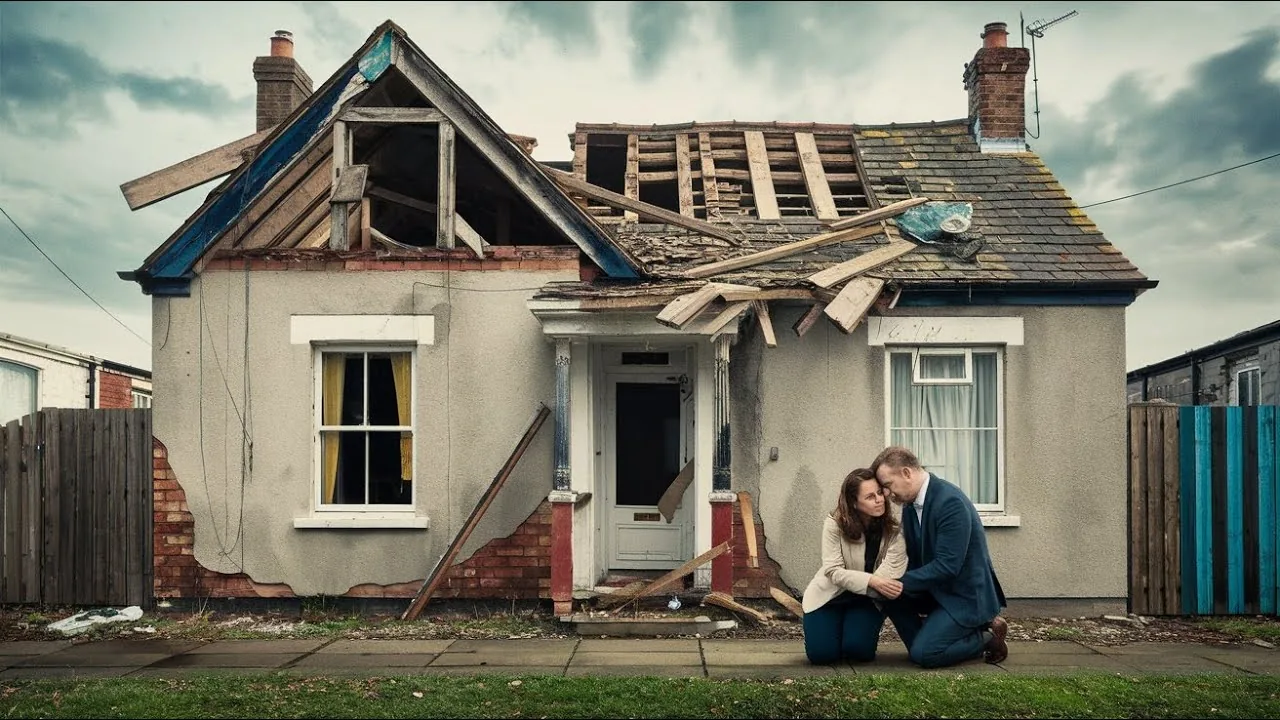
Some of the quickest ways to lose money in property start with a plan that looks impressive. Buy a tired house, give it a beautiful refurbishment, obtain a much higher valuation and pull your money back out. On paper, it can look almost effortless. On site, there are builders, hidden problems, finance costs and a valuer who may disagree with you.
In my video published on 17 January 2025, I shared examples from conversations with investors alongside projects from my own experience. The common problem wasn’t a lack of ambition. It was committing too much money to improvements without enough evidence that the finished property would justify the spending.
You can watch my original property-investing mistakes video on YouTube. Here are the lessons I’d want a beginner to understand before taking on a refurbishment or HMO conversion.
Don’t refurbish a rental as though it’s your dream home
A rental property needs to be safe, compliant, durable and attractive to the people who will live there. That doesn’t automatically mean stripping everything back and installing the kitchen you would choose for your own home.
There is a difference between necessary work and spending that mainly satisfies the owner’s taste. A dated but serviceable kitchen may need attention, but replacing it completely should be an investment decision. What will the work achieve in rent, value, durability or lower future maintenance?
I would ask the same question about bathrooms, decoration and flooring. Sometimes substantial work is essential. Sometimes a focused improvement programme produces most of the benefit at a fraction of the cost.
The trap is assuming that because the finished house looks wonderful, the project must have been financially successful. A tenant can appreciate a lovely kitchen without paying enough additional rent to repay what you spent on it. A buyer can admire the finish while still comparing your property with cheaper houses nearby.
The Lancashire refurbishment that grew beyond its budget
One investor I spoke to described buying a Lancashire property for £65,000. His intended refurbishment budget was around £30,000–£35,000, with an expected finished value of £120,000.
From the photographs he showed me, I thought parts of the property were dated rather than beyond use. In the video, I suggested that new flooring and decoration might have been a more proportionate starting point. That was my assessment from the material shared, not a substitute for an inspection or electrical and safety checks.
He chose a much more extensive project. The finished photographs looked excellent, but the builder’s projected cost increased to around £50,000–£55,000. They parted ways, and the investor still couldn’t find someone to complete the work within the original budget.
The eventual valuation he reported was £95,000. That was a long way from the £120,000 he had expected, and it undermined his plan to recover his investment through refinancing.
There is an arithmetic correction to the spoken account: £65,000 plus £50,000–£55,000 is £115,000–£120,000 before other costs. I gave a lower rounded total in the video. Using the component figures, the gap against a £95,000 valuation is already £20,000–£25,000 before buying costs, finance and other expenses.
Those figures are a story shared with me, rather than audited project accounts. But the lesson doesn’t depend on pretending they are more precise than they are: a larger bill combined with a lower valuation can turn an apparently attractive project into a serious problem.
Why the time taken matters as much as the final bill
I said that Lancashire project took around two years. That’s a long time for capital to sit in a property while the owner is dealing with builders, additional work and uncertainty.
The obvious cost is the refurbishment overspend. Less obvious costs include finance running for longer, holding expenses and rental income that isn’t being earned while the property is unavailable. A delay can also move your refinancing into a different lending market.
Then there is opportunity cost. Money committed to that one project can’t simultaneously fund another purchase or remain available as a reserve. In the video, I argued that a simpler approach could have left more capital available for other properties.
That alternative outcome wasn’t guaranteed. It would be wrong to say he definitely would have bought several successful rentals and enjoyed a particular return. The useful comparison is between the realistic options he had, including their costs and risks, before committing to the bigger refurbishment.
When I assess a project, I therefore want a timeline as well as a budget. Who is doing the work? What could delay it? How much does another month cost? What happens if the refinance takes longer than expected?
Don’t assume a commercial HMO valuation will rescue the deal
Another example involved an investor who, as described to me, paid about £100,000 for a property and spent around £80,000 converting it into an HMO. The hoped-for valuation was £240,000, based on the expectation that the income-producing business would support it.
The reported valuation was only £130,000. I said in the video that the investor couldn’t operate the property as expected and eventually sold at a loss.
This is why I am wary of a deal whose success depends on a particular valuation method. A higher rental income does not guarantee that a lender will accept the commercial valuation you want. The property, its configuration, the lender’s criteria and the valuer’s approach all matter.
For illustration, a 75% loan on £240,000 is £180,000. The same percentage of £130,000 is £97,500. That is an £82,500 difference in borrowing capacity before fees and any other lending limits. It shows how much of the plan can disappear when the assumed valuation doesn’t happen.
I would establish the likely financing route with a suitably experienced broker before buying or converting. Planning, licensing, room suitability and the intended tenant demand also need checking. A spreadsheet showing room rents is only one part of the proposition.
My own HMO example wasn’t a spectacular result either
I also used one of my own projects to make the point. In that recording, I described paying £275,000 and spending around £70,000 on refurbishment, giving a combined purchase-and-works figure of £345,000. The end value I quoted was approximately £350,000.
I called the £5,000 difference a profit in the video. More precisely, it was the gap between those two cost components and the stated value. It wasn’t necessarily a realised profit after transaction costs, finance, tax and every other expense.
The property generated reasonable cash flow, so I didn’t describe it as a complete disaster. My criticism was that I thought a simpler refurbishment and a different use of the remaining capital might have produced a better overall result.
Looking back, it’s easy to compare the actual project with an idealised alternative. The fairer lesson is to ask that question before starting: does the additional complexity offer enough potential benefit to justify the money and time at risk?
I’ve discussed the broader trade-offs in my comparison of property investment strategies. An HMO can work very well, but its income potential doesn’t make every conversion worthwhile.
The Corby project shows why buying price matters
I contrasted those examples with my Corby refurbishment. In this January 2025 account, I described a £116,000 purchase, roughly £40,000 of works and a valuation of £210,000.
The property was in extremely poor condition, with major elements missing, and ordinary mortgage-funded buyers weren’t the natural competition. My argument was that the condition helped us negotiate a price which left room for a viable project.
Purchase and works total £156,000 using those figures. The £54,000 difference against the valuation is before other costs, and it isn’t cash sitting in a bank account. A valuation is an estimate of the asset’s worth; accessing some of that value normally requires selling or borrowing against it.
I have discussed this project in other videos using different rounded figures. For this article, I’m retaining the figures used in this particular recording rather than mixing accounts from different dates into a supposedly exact project history.
The lesson isn’t to seek the most damaged house available. A badly damaged property can conceal substantial risk. The lesson is that the purchase price must reflect the work, uncertainty, financing and likely finished value well enough to leave a margin.
Poor condition does not automatically mean no stamp duty
There is another statement in the video that needs clarification. I described an uninhabitable property as not attracting stamp duty. That is too broad and shouldn’t be used to budget a purchase.
HMRC’s guidance on property not suitable for use as a dwelling explains that there isn’t a general SDLT exemption for a property simply being described as uninhabitable. Disrepair and missing facilities do not automatically remove its residential character.
Whether ordinary mortgage finance is available is a separate question from the tax treatment. A lender declining to finance a property does not decide the SDLT bill. Have your conveyancer establish the position from the actual facts before you commit.
That clarification fits the wider message of the video: don’t make an attractive project work by assuming away a significant cost.
Give the project room to disappoint you
My recurring phrase is that the risk is real and the reward is only potential. You commit money before you know the final bill, the exact completion date or the eventual valuation.
I would run a less favourable version of the deal before deciding. Increase the works budget, lower the expected valuation and allow a longer period without rent. Then see whether you can still fund it and whether you would still want to own the finished property.
A contingency isn’t a target to spend, and it doesn’t cover every possible problem. It is a recognition that a building project rarely follows every assumption perfectly. If the entire plan depends on getting every pound back immediately, even a relatively modest setback can create pressure.
Also ask what happens if you have to keep more money in the property. Can the rental business support the debt? Does keeping that capital there prevent another important commitment? A workable fallback is more useful than an optimistic headline return.
Simple deals still deserve proper checks
My preference is often a sound rental bought at a sensible discount with manageable work. I gave a hypothetical example of buying something genuinely worth £100,000 for £85,000–£90,000. The discount creates a better starting position, provided the valuation is supported by evidence.
It doesn’t remove all risk, despite my shorthand at the end of the video. Repairs, tenants, borrowing costs and market movements still matter. For the valuation side, read how I assess buying below market value.
If you’d like to discuss a deal, book a free 30-minute call with me, explore Starter Club or find out about Done For You. The aim is a property that works financially and provides a decent home, without unnecessary complexity consuming the return.